When Polynesian voyagers came to settle the Hawaiian Islands between 1000 and 1200 A.D., they arrived in canoes filled with two dozen species of useful plants that would become the elemental food and material sources to establish a thriving, self-sufficient society in the middle of the Pacific Ocean. Known as canoe plants, kalo (taro), niu (coconut), ‘uala (sweet potato), and ‘ulu (breadfruit) are just a few of the crops that were traditionally grown through sustainable, regenerative farming practices that linked the resources of entire watersheds, from upland farms along cold, freshwater streams to shoreline fishponds.
Most of the canoe plants can still be found growing across the Aloha State today, but Hawai‘i’s traditional farming practices have been superseded by modern Western agricultural systems that rely heavily on imported fertilizer, pesticide, and fungicide to grow large swaths of monocrops (single crops grown repeatedly on the same land), like pineapple and corn. This method of farming strips soil of its nutrients, requires higher use of pesticides and water, and reduces biodiversity, creating a ripple of detrimental effects in the environment.
Almost 200 years after the first sugar plantation opened in Kōloa, Kaua‘i, the business of growing food mainly for export has devastated Hawai‘i’s food sovereignty. In fact, Hawai‘i imports 85% to 90% of its food, making island residents vulnerable to supply-chain and shipping disruptions caused by natural disasters and global events, while paying more out-of-pocket for the same fruits and veggies enjoyed for less on the mainland.
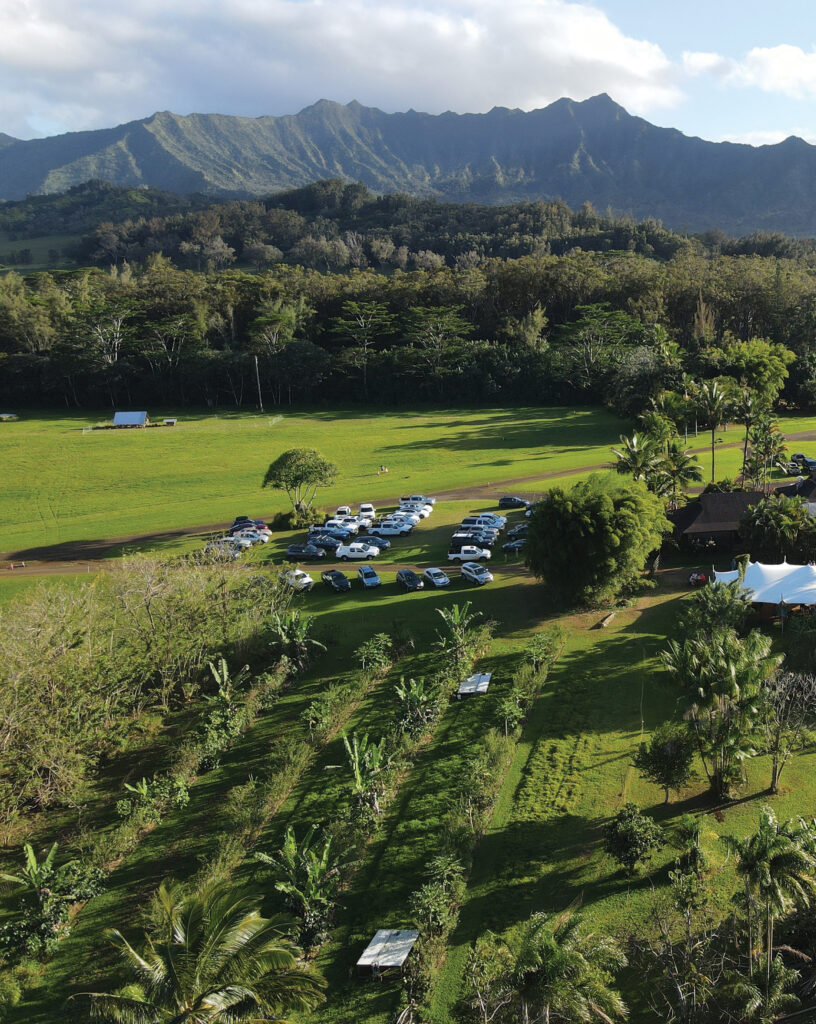
Fortunately, Hawai‘i has a growing contingent of local farmers who are eager to return to a more sustainable, regenerative form of agriculture to produce diverse crops for local consumption and value-added food products, such as chocolate, tea, honey, and even ‘ulu chips. Common Ground, a lifestyle company situated on a former sugar plantation and guava farm on the verdant north shore of Kaua‘i, is raising awareness of the benefits of regenerative farming by creating a community of farmers, food and beverage business owners, and visitors on its 83-acre agricultural campus. Through its demonstration agroforest, Food Innovation Center, community food hub, restaurant, and business incubator for farmers and food entrepreneurs, Common Ground is practicing the future of Hawaiian farming today.
“As growers, we need to develop agricultural systems that don’t rely on mainland inputs. You can’t talk about food security and resilience in the same breath if all of the farm inputs — animal feed and fertilizer — are coming over on the same barge as the food,” Common Ground Director of Agroecology John Parziale tells The Rooted Journal. “Farmers must adapt and develop agricultural ecosystems that can be productive without those inputs, and the time to develop these systems is not when the mainland inputs are gone.”
Adaptability is one of the hallmarks of traditional Hawaiian agriculture, and it will once again be required of the islands’ farmers as they reimagine agricultural systems that could reestablish Hawai‘i’s food sovereignty. Parziale, who has been practicing organic, ecological agriculture on Kaua‘i for 23 years, sees the return to regenerative farming practices as a solution that can be modeled and scaled to farms across the state, creating self-sustaining ecosystems.
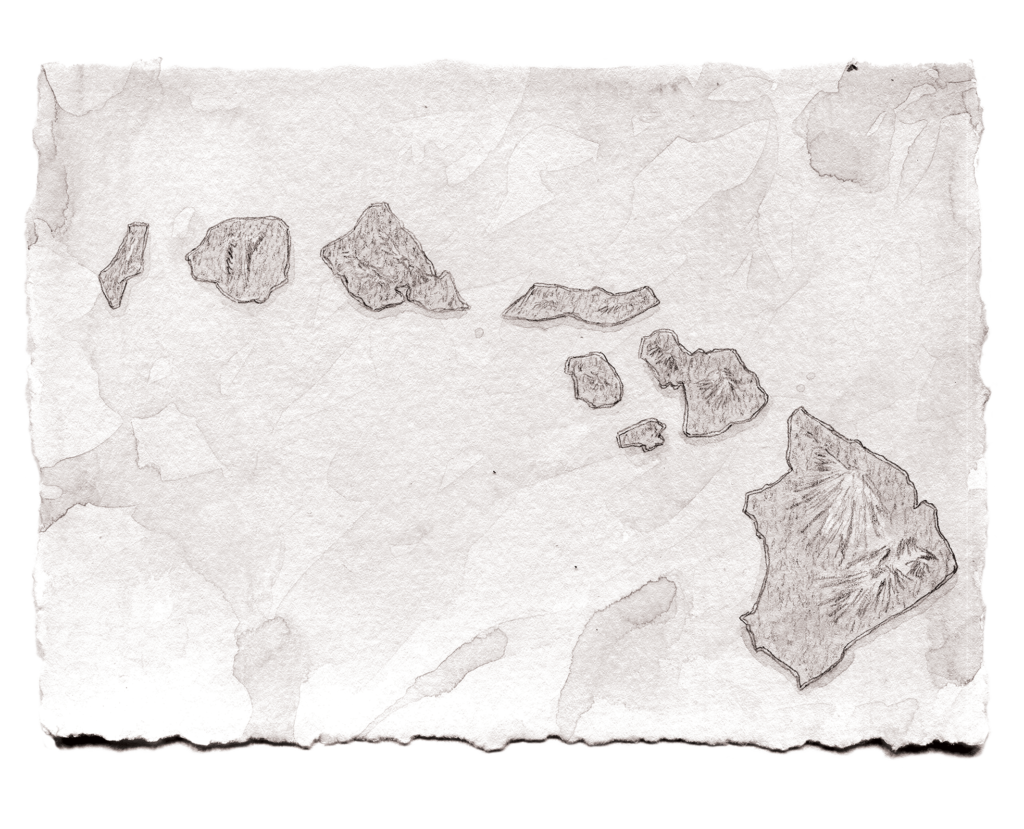
The Hawaiian islands import a staggering 85% to 90% of their food.
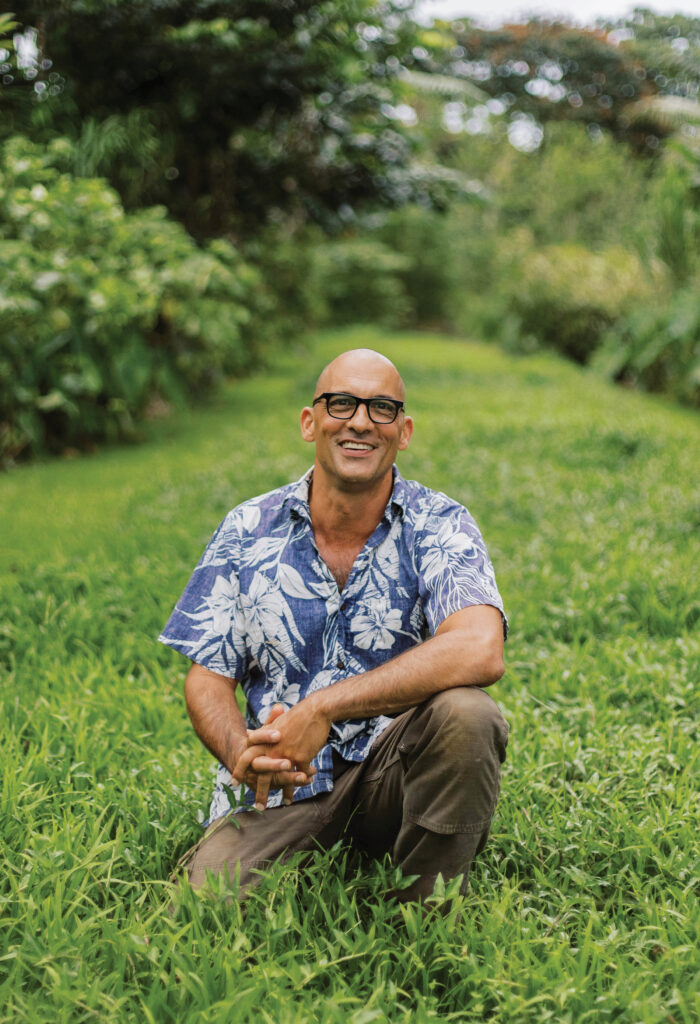
1. Common Ground’s John Parziale has practiced ecological agriculture on Kaua’i for over 20 years.
2. Common Ground’s 83-acre agricultural campus is a community food hub, restaurant, and business incubator.
At Common Ground, Parziale is employing what’s known as successional agroforestry: cultivating a rainforest ecosystem that is interconnected from fruit to fertility. And by incorporating multi-species animal grazing into the system, he’s eliminating the need for imported inputs like fertilizer and animal feed. “Using nature’s operating instructions on how forests are created and then managing yields throughout that process, I’m filling ecological niches with the appropriate plants and animals, which provide yields as well. The climax of this system is a food forest,” he explains.
Parziale has layered his diverse agroforest with canopy trees like avocado and breadfruit; understory plants like kava, coffee, and peach palm that grow between the canopy and the ground cover; and forest floor species like upland taro and seasonal vegetables. To cultivate regenerative fertility, grazing beef and dairy cows leave manure behind, which chickens scratch and spread, unearthing nourishing insects for healthy egg laying and enabling the plants to more efficiently absorb the nutrients from the manure. Parziale also enriches the soil with chop-and-drop pruning, so the plant cuttings decompose right where they grew, and mitigates pests through biological farming, bolstering natural predators that keep the pests in check. For example, instead of spraying pesticides to kill nematodes (roundworms), he feeds soil fungi that naturally prey on nematode eggs and juveniles. The result is a self-reliant system that can operate without a continuous supply of imported inputs.
Through the many programs at Common Ground, Parziale and the team share this knowledge, and the food it produces, with island residents and visitors alike. The Common Ground Incubator program has helped 17 local businesses develop systems and strategies for their food, beverage, and lifestyle products, essentially linking food entrepreneurs with local farmers to engender a collaborative, sustainable agricultural economy in Hawai‘i. A new cohort will launch this year. A farm-to-table restaurant feeds visitors with 100% locally sourced food. And the organization also acts as a local food hub and distribution center, establishing much-needed local supply chains.
“Farmers are food providers. As trusted growers, they have a deep connection to the land and the community,” says Parziale. “When people see the overlay of our young forest ecosystem, the layers of edible ferns growing on the ground, coffee growing under the ‘ulu trees, the grazing animals, it’s an aha moment and people can grasp it — the interconnectedness and how it can strengthen our food security.”