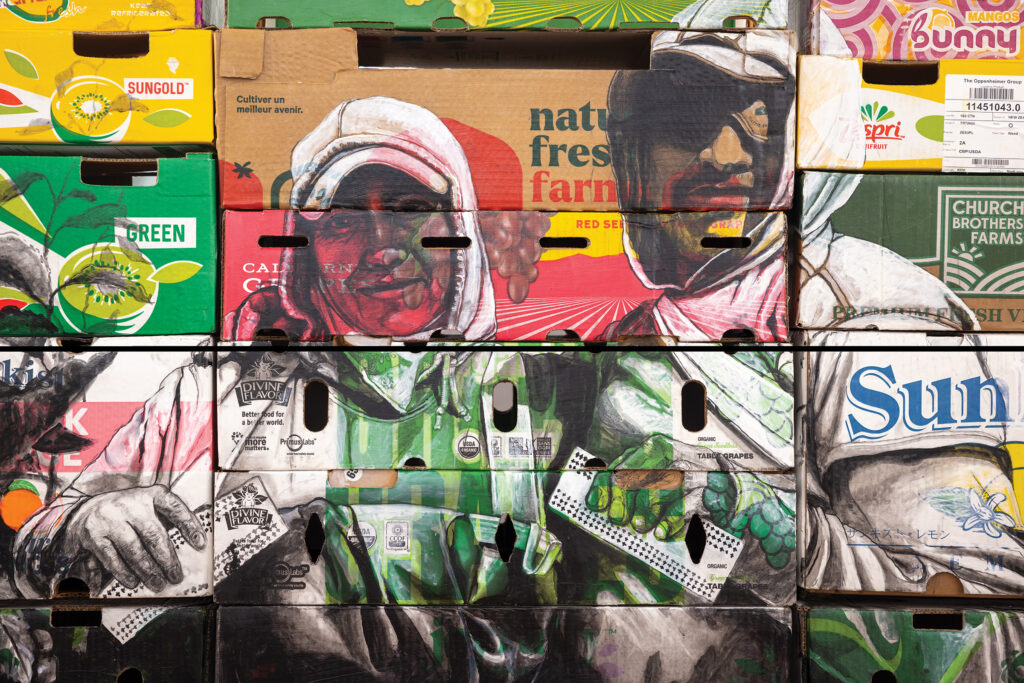
“Write what you know” is conventional wisdom among authors, but similar advice is shared among artists, too. A landscape, a medium, a portrait or theme comes across as far more authentic when created by someone who has actually experienced it. Narsiso Martinez, best known for painting portraits of farmworkers on discarded produce boxes, delivers that authenticity. For nearly a decade, the L.A.-based artist from Oaxaca, Mexico, worked in fruit orchards and crop fields to pay for art school. His vivid pieces, shown in galleries and museums all over the United States — including the Los Angeles County Museum of Art and the Museum of Fine Arts, Houston — provide a rare, personal, and deeply honest look into the lives and working conditions of immigrant farmworkers in the modern American agricultural industry. Martinez tells The Rooted Journal that beyond the pain or struggle inherent in farmwork, he aims to portray the simple humanity of these essential workers.
THE ROOTED JOURNAL Tell me about your time as a farmworker while you were in art school.
NARSISO MARTINEZ When I went to [California State University, Long Beach] after community college, that’s when I started to work in the fields up in Washington state. I did that work every summer for nine years, from undergrad on through my graduate program. At the beginning it was just to make money, but by the end of my time, the farmwork really spoke to my program and the thesis paper I was writing on it for my MFA.
It was actually pretty backbreaking work. The first thing I had to pick was asparagus, which is super low to the ground; it just happened to be that time of the season. Then we moved on to grapes and other produce. I’d take a bus up to Washington state and back to L.A. every summer, literally leave the day my classes were finished and get back the day before, to maximize it. Looking back, I don’t know how I did it [laughs].
At first I’d just work with my brother a lot; he’s who got me the work in the first place. But at one point I separated from my brother, and I went off to reconnect with coworkers I’d met over the years. I was reconnecting with the community, and we were sharing our stories of how we came to the United States, and we all had similar stories — about the family we’d left, etc. I realized that I could speak about this in the art. If anything, it was like: I’m gonna shed light on farmers and what they do.
TRJ Your work conveys a lot of stories. What’s the main idea you try to communicate?
NM In general, I want to speak about farmworkers and their contributions to the economy and to the country, and show that what they do is very important. They are essential workers, and I feel like that’s my main goal with these portraits and landscapes. Because they’re not often treated like essential workers.
Take, for example, having lunch on the ground. Most of these fruits get to nice tables for families or in restaurants, but the people who pick them, they have their lunch literally on the ground. There’s a lot of pesticide residue and dirt. Often, they don’t have time to even wash their hands before they eat. The more produce you pick, the more money you make, so people are always in a hurry. So you just sit on the ground and eat. It’s sad and unfortunate.
But honestly, I’m not trying to just show suffering. When I did [farmwork], we didn’t even know we were working in bad conditions [laughs]. I just want to show their humanity. Not everyone is in pain; some people sing and laugh — there are many faces to this work. We just need to have a bigger conversation between the farmworkers and the agricultural industry.
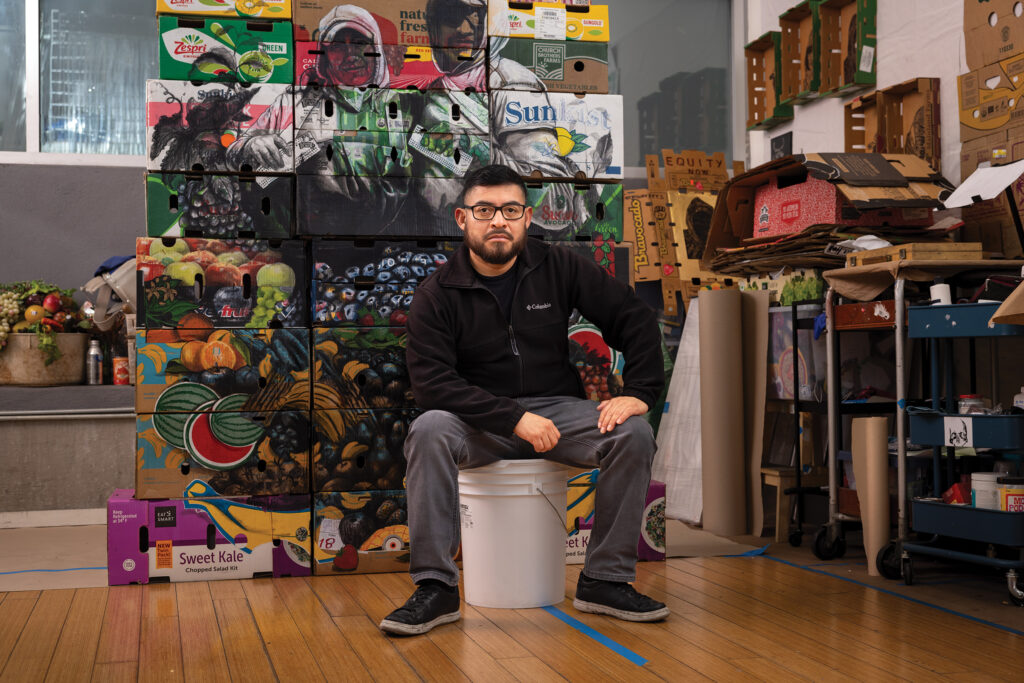
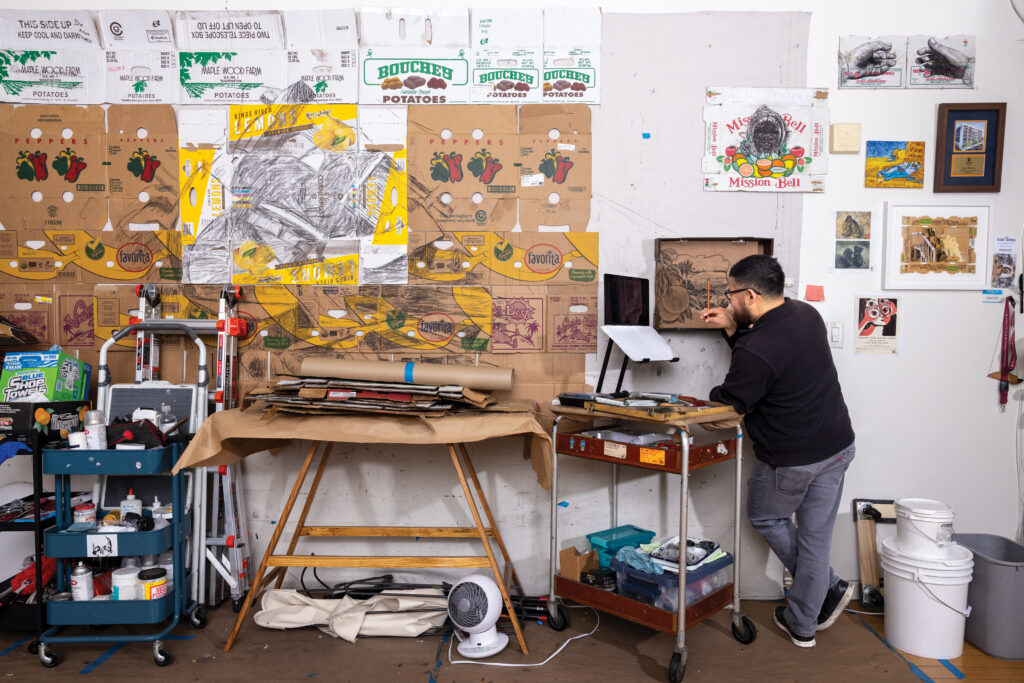
Martinez was a farmworker himself before celebrating their fortitude through his art.
TRJ What should that conversation entail?
NM The industry just needs to be more responsible. They need to look more closely at the working conditions and what’s going on in the orchards. They need to be more responsible with their workers. They need to be fair. The companies know that many of their workers are undocumented — which can be convenient for them, because [the workers] can’t complain. As a farmworker, especially an undocumented one, who do you even complain to? It’s kind of inhuman, really. The agricultural system can feel like a machine, and it needs more humanity.
TRJ What artists inspired you as you became an artist yourself?
NM I always loved drawing landscapes, all through my teenage years, but I was never professionally trained. I went to school as an adult pretty late, and suddenly I realized that there were some really amazing painters out there, and that blew my mind. I grew up in Oaxaca, Mexico, in a small farming town. Painters like [Vincent] van Gogh and [Jean-François] Millet, their paintings were about the peasants, the people that worked in the fields, so their work actually spoke to me really strongly.
David Alfaro Siqueiros was a big inspiration, too, him sharing the stories of indigenous natives. I’m Zapotec, so when I was working in the fields over here, I met a lot of Zapotec people and I reconnected with that part of my identity. Siqueiros was the inspiration to speak about those communities and tell their stories through art.
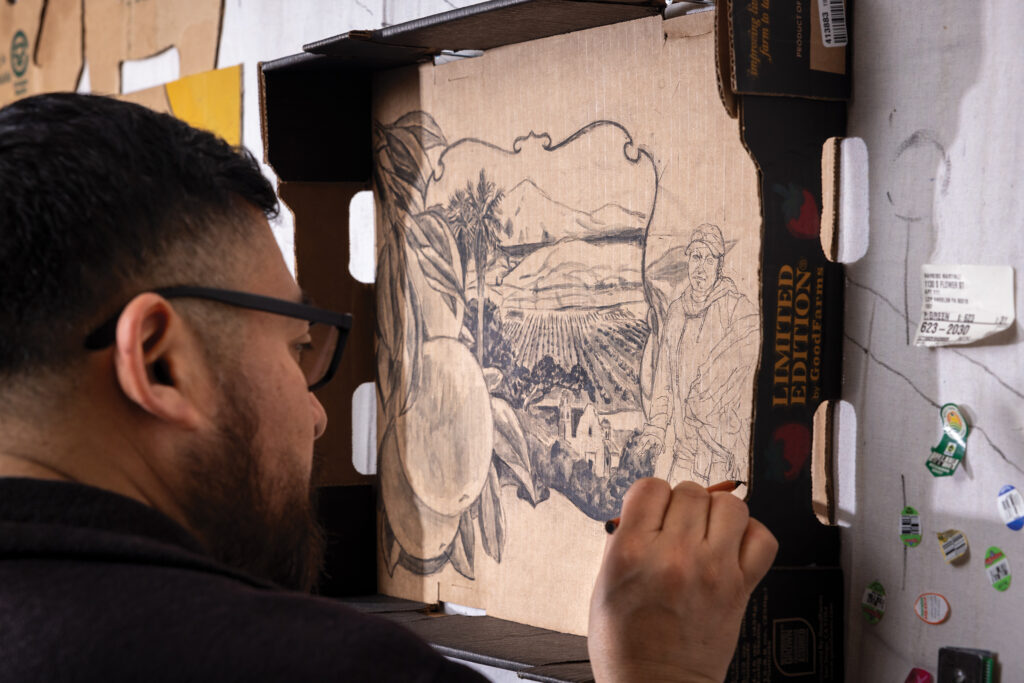
Martinez uses his own photographs of farmworkers as source material. Some workers send him their portraits if their paths didn’t cross during the farming season. “They want to be acknowledged,” he says.
TRJ Talk to me about your process. You take photos too, right?
NM Yes, I use my own photographs for source material. I’ve been taking photos since I first started working in the fields. It’s interesting because each year, people would know that I was going to art school, and I’d have my digital camera and sketchbook with me out there, but the work is seasonal, so I wouldn’t always see the same workers. But people would often send me photos of themselves from their phones if I missed them. So, it was like they wanted to be included. They want to be acknowledged.
TRJ Are there any pieces you’re particularly proud of?
NM You know, every piece has a story. Each one, I remember the situation of how it happened and what that person was like, and sometimes it becomes quite emotional. Sometimes I have to compose myself and come back to it. I don’t think I can choose, but some pieces seem to interest academia more than others. Those pieces that speak to academia are important to me, because they get put in museums and they are talked about in terms of history and in terms of inclusivity. And that represents what an artist can do or what an undocumented immigrant can do, and I’m proud of those pieces. Mostly because it’s not about me anymore, it’s about this community. The farming community, the immigrants, the Oaxacan community — hopefully they feel more included in the art world now.