As an offensive lineman for the Baltimore Ravens, football player Luke Bowanko consumed an inordinate number of calories to maintain his 6-foot-6-inch, 300-pound physique. That included a Chipotle burrito just about every day between lunch and dinner “as a snack,” plus an entire postgame pizza.
But after multiple injuries forced him to retire in 2019, he began bingeing the documentary series “Chef’s Table” on the couch, and he realized his diet wasn’t exactly ideal for healing. He was inspired to start shopping at his local farmers’ market in Denver, where he bought veggies to scramble with eggs. Before he knew it, he was at a lumberyard buying wood to build raised garden beds. He loved growing his own food — tomatoes, squash, peppers — almost as much as eating it, and he fantasized about doing it on a larger scale.
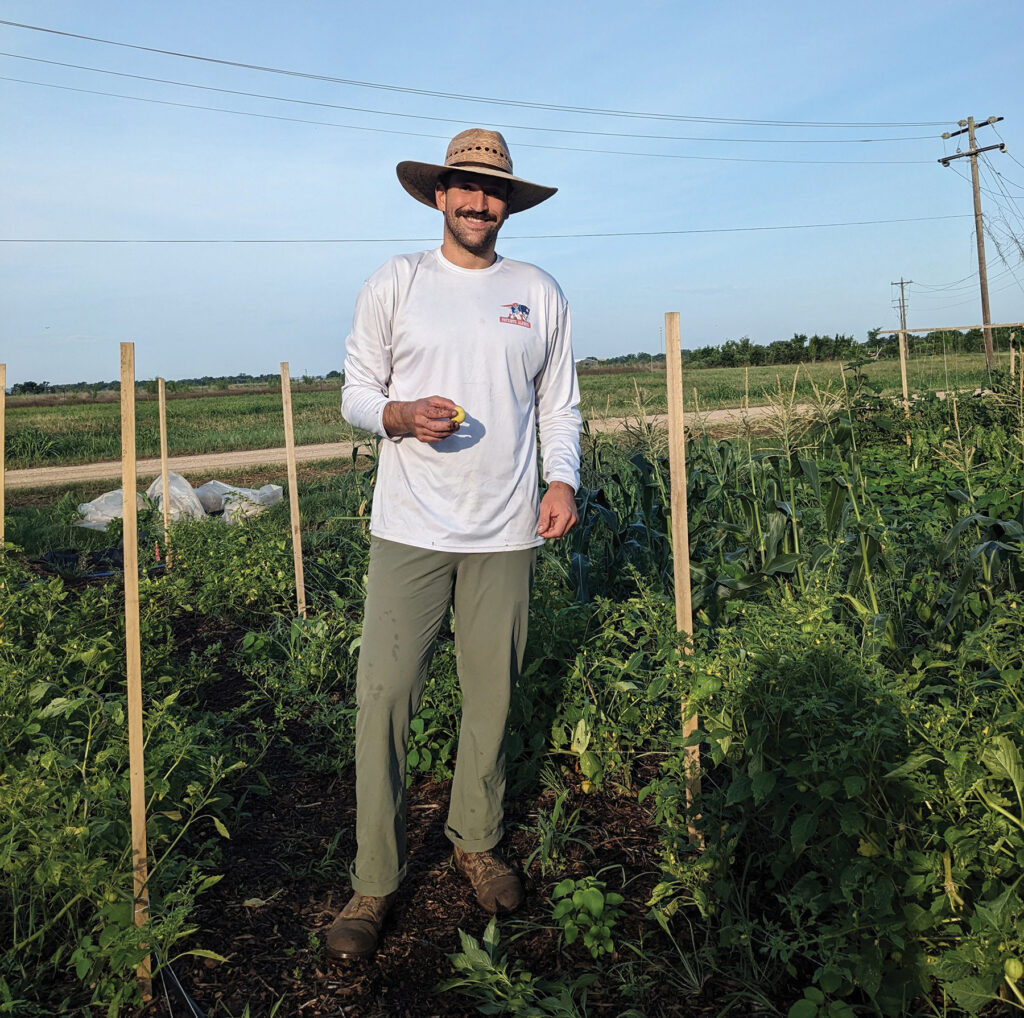
No one in Bowanko’s family was a farmer, and he wasn’t sure how to become one until 2023, when he moved to Austin, Texas, and discovered Farmshare Austin. Located 25 miles east of downtown, the 13-acre Real Organic–certified farm harvests more than 30,000 pounds of produce each year and trains new farmers in the process. It’s where I find Bowanko on an unseasonably warm December afternoon, his slightly lankier frame towering over a bin of cabbages he’s cleaning up for delivery to Fresh for Less, the farm’s food-access program.
“[Farmshare] throws you in the deep end, and you get to learn a lot quickly,” Bowanko tells The Rooted Journal. He’s wearing a shirt repping the University of Virginia, where he played center and offensive guard. “If you’re just growing food in your backyard, it might take you five or 10 years to figure out some of the stuff we’ve already learned.”
Programs like Farmshare’s offer valuable experience to beginning farmers — those with 10 or fewer years of experience, as defined by the United States Department of Agriculture (USDA). Such farmers make up nearly a third of the nation’s 3.4 million agricultural producers. They’re increasingly important as the average age of farmers — 58.1 years in 2022 — continues to rise.
But they face significant challenges, the biggest being access to land and capital, according to the nonprofit National Young Farmers Coalition. To combat those challenges, the USDA’s Farm Service Agency offers low-interest farm ownership loans in amounts up to $600,000, but applicants need three years of experience to qualify for them.
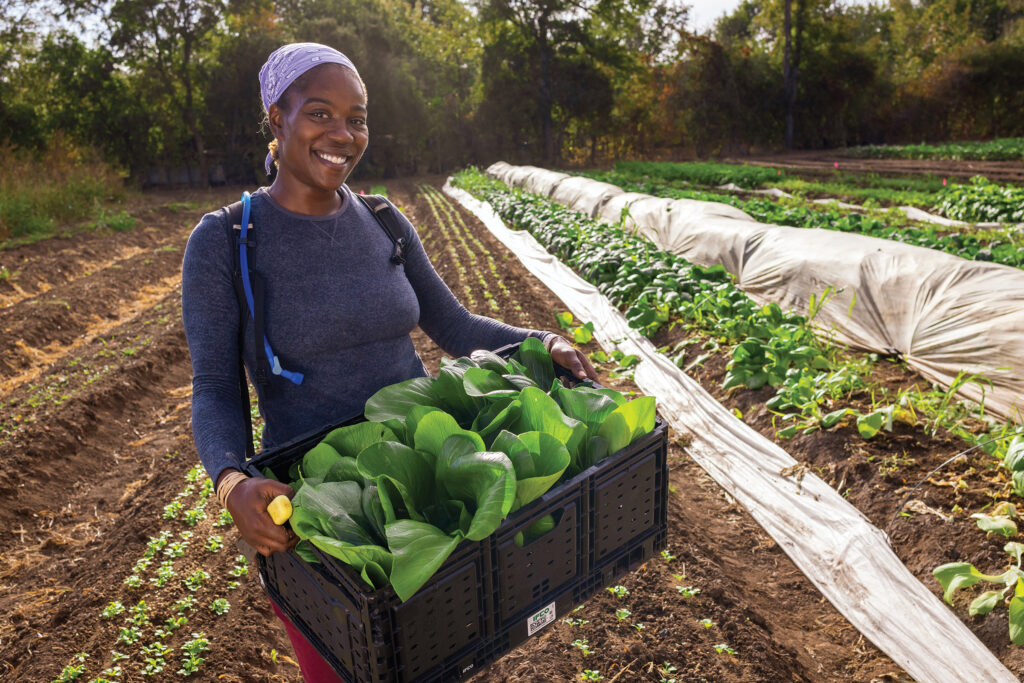
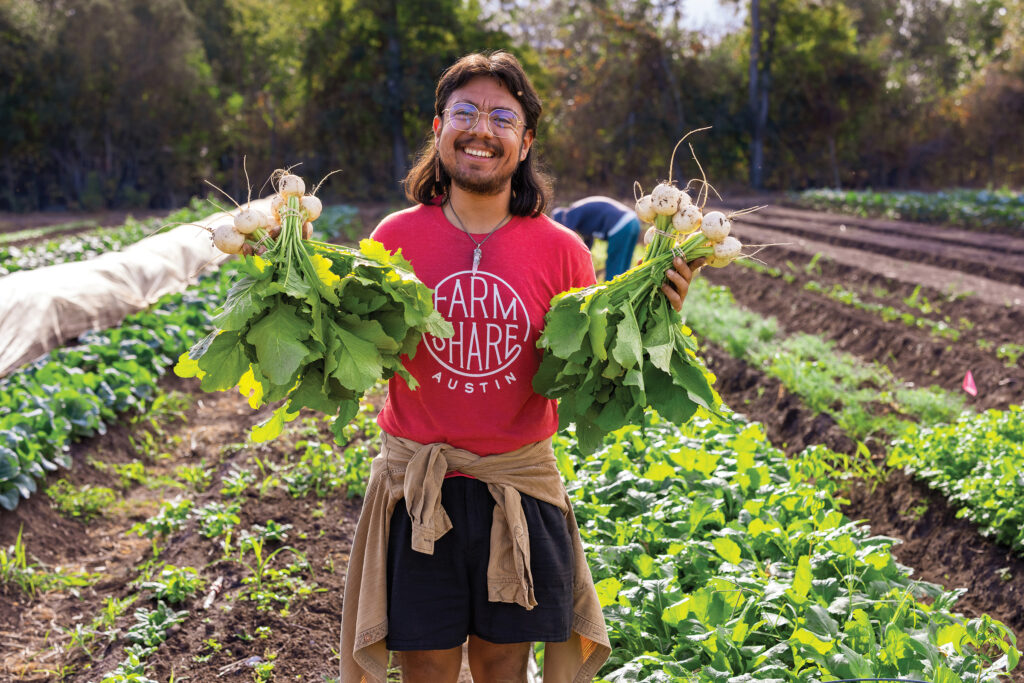
Farmshare offers training for budding farmers with less than 10 years experience.
“It’s not just whether they’ve worked on a farm for three years, but have they also been active in making day-to-day decisions?” explains Amanda Robertson, the acting national coordinator for the USDA’s Beginning Farmer and Rancher Development Program (BFRDP) and herself a sixth-generation farmer. “We want to ensure that folks are ready for this.”
There are multiple pathways to gain that experience, Robertson says. Many farms offer internships, which usually last a few months and tend to be broad in scope, providing training in everything from livestock to forestry production. Participants aren’t typically compensated beyond college credit, though that isn’t always the case. The North Coast Growers’ Association (NCGA) offers interns at farms across California’s Humboldt County $20 an hour for up to 100 hours of work — an initiative funded by a BFRDP grant that turns what is often volunteer work into a paying gig. “It’s for someone who is already working in an unpaid capacity and is at their working limit for how much time they have to spare,” says Gwilym Walker, a conservation planning specialist at NCGA. “They don’t have to leave where they’re currently working in order to get paid for work.”
Beginning farmers can also sign up for apprenticeships, Robertson says. Those tend to last one to three years and are typically compensated. Mountain Roots, a farming and agricultural education nonprofit in Gunnison Valley, Colorado, offers a 22-month apprenticeship that spans two growing seasons and 3,200 hours. Participants earn $17 an hour to learn farming skills as varied as tractor driving and budget management.
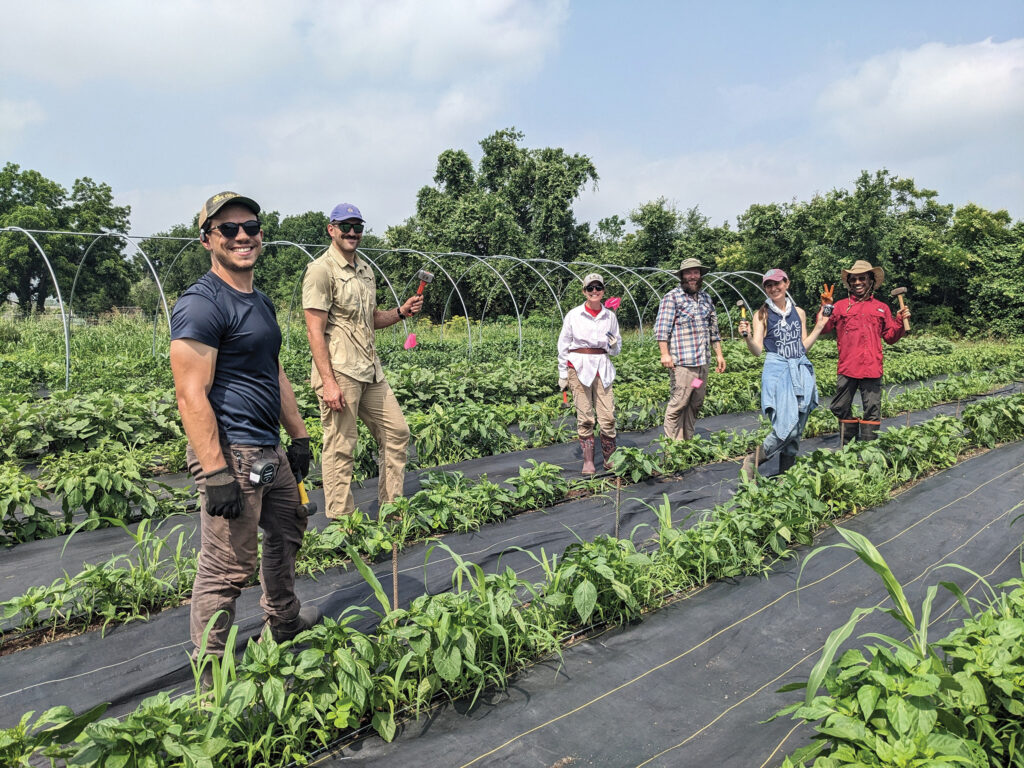
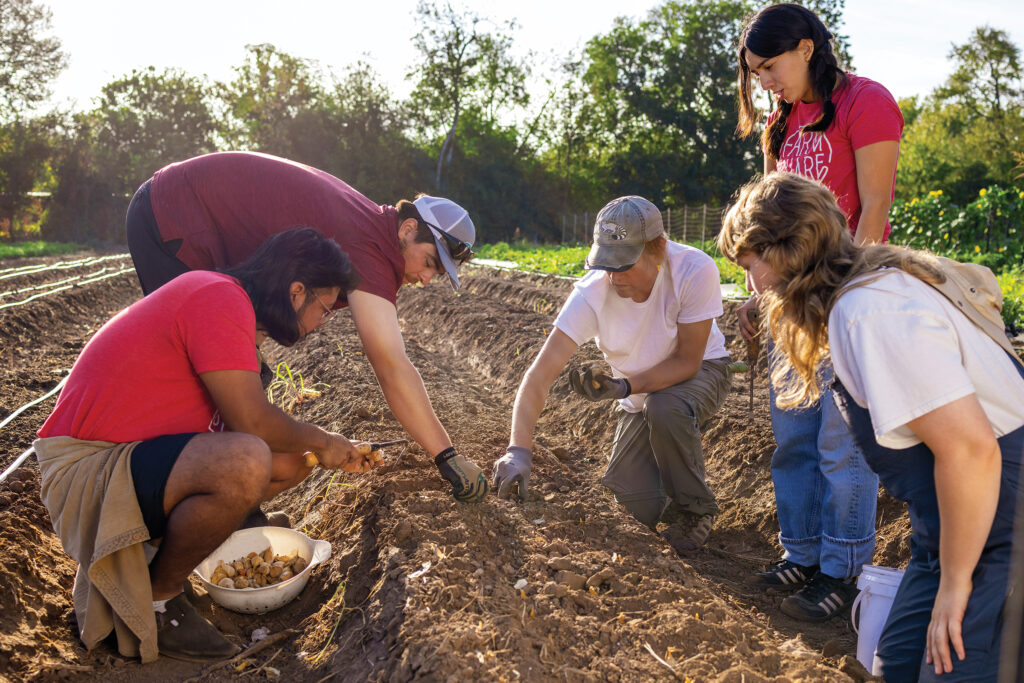
1. Bowanko opted for the 20-week course that gave him access to two 100-foot-long rows for his main passion — a salsa garden.
2. Farmshare’s USDA-sponsored pathway to farming programs start at just a few months and scale to a few years for anyone wanting to go deeper in their pursuits.
Incubator programs require a little more skin in the game. The Central Texas Farm Incubator Collaborative is a three-year program that connects advanced-beginning farmers with area farms, including Farmshare. They get access to tools and infrastructure but pay a graduated rent for up to a half-acre of land — one-third of the land’s market value the first year, two-thirds the second year, then its full value the third year. “It lets them launch a business and have access to land without having to make that purchase themselves,” says Andrea Abel, Farmshare’s executive director.
Bowanko isn’t there yet. He started with Farmshare’s Farmer Starter, a 20-week cohort-based program that gave him access to two 100-foot-long rows. He packed them with poblano and jalapeño peppers, tomatillos, and heirloom corn for making masa for tortillas. “I wanted to have a salsa garden,” he says.
The training is similar to an internship, but the program costs $3,500 (scholarships are available) and includes classroom training and tours of neighboring farms. “There’s not only the focus on growing techniques, but there is also a focus on how we got here with the food system and why,” Abel says. “We talk a lot about climate change. There is a significant amount of time spent on business skills. Our students are learning how to read a balance sheet. They’re learning about what different types of insurance needs you might have. They’re looking at farming from a lot of different angles.”
Bowanko graduated last spring, and this fall he moved on to Farmshare’s Cultivator program. It gives him a bit more land to work with — six rows, each 150 feet long. When I visit, Bowanko walks me toward the back of the farm to see the plot, which he’s chosen to share with another student, Katy David, a former public health professional. When we arrive, she’s walking through a row of chard, picking off leaves that have bug holes to make the veggies more attractive to customers. “People don’t want to eat that,” she says.
Cultivators can market and sell their produce on their own, though they also have a guaranteed market outlet through Fresh for Less, which offers year-round, reduced-price produce to people in food-insecure zip codes in eastern Austin. Bowanko and David are charged only 10% of their earnings. Lately, they’ve been figuring out how to keep their product as fresh as possible. “When you pick the chard during the day matters,” Bowanko says. “If it’s too warm out, the chard will wilt and it will never spring back.” They try to get out as early as they can to harvest. “Then it’s ‘How quickly can we get it into the cooler? How quickly can we get off the dirt?’” he says.
As we talk, Bowanko bends down and begins snipping French green beans ahead of a cold front. The beans, he explains, were a bit of an experiment. He planted them too late, and they didn’t do well, though there’s at least enough for him and David to each enjoy some for dinner. While they lack the caloric punch of a pizza, they’re “really yummy,” Bowanko says.
Bowanko will graduate from the Cultivator program in the spring. He’s not yet sure if he’ll stay in Austin long enough to participate in the incubator program. But one day, wherever he winds up, he hopes to have a farm with veggies and livestock — offering his community the sort of rich, nutrient-dense food that not only helps meet peoples’ caloric needs, but also enhances their health.