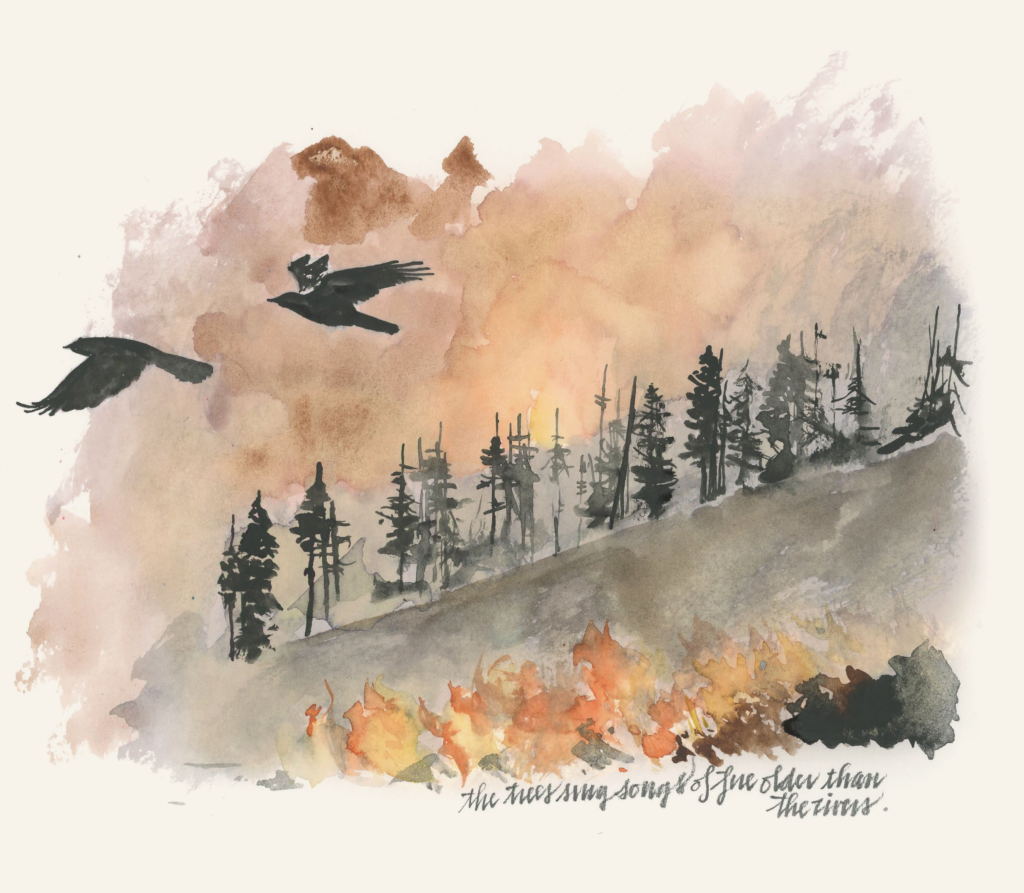
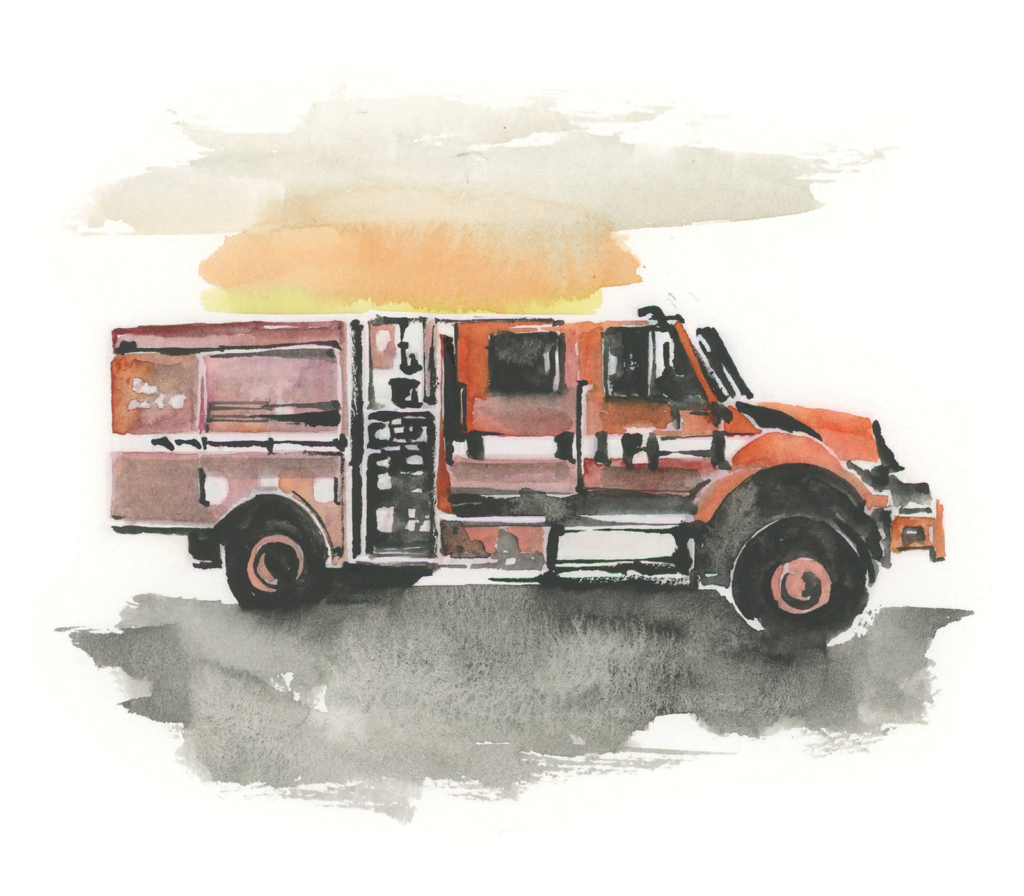
As I write this in January 2025, California is burning. More than 80,000 Los Angeles residents have been evacuated, the Altadena and Pacific Palisades communities have been decimated, and the winds fueling these fires are still blowing. Indeed, “The State of Fire: Why California Burns,” the latest book from award-winning author-artist-conservationist Obi Kaufmann, is eerily timely. Part field guide, part scientific paper, part poetry — brimming with stunning watercolor illustrations, maps, and calligraphic excerpts — “The State of Fire,” like all of Kaufmann’s works, is far more than a good read. The book is an illuminating experience, if not a crash course in ecological philosophy, as Kaufmann phrases it. A few hundred miles north of the flames, from his home office in Oakland, Kaufmann spoke to The Rooted Journal about his book and our complicated relationship with fire.
THE ROOTED JOURNAL Why does California burn?
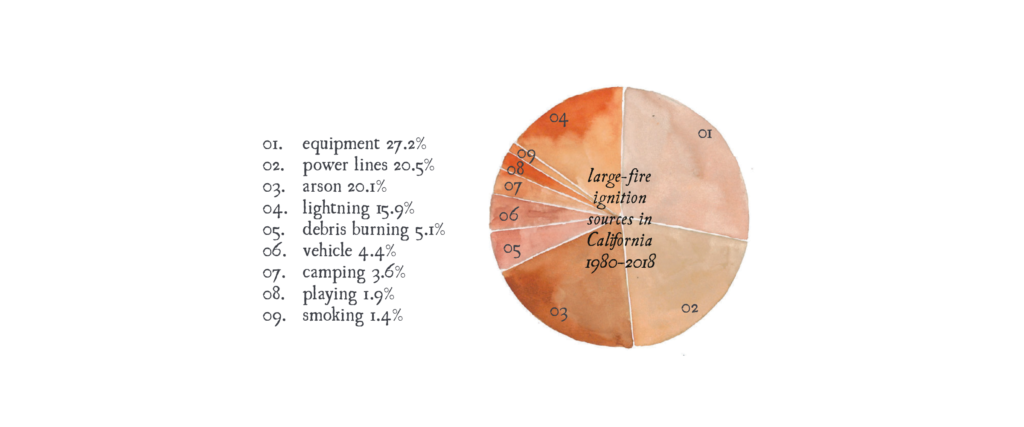
OBI KAUFMANN Fire exists in California as it does nowhere else on the planet. Fire has actually been stewarded by humans for an entire geologic age, in the Holocene and before. California burns because of decisions that people make or don’t make, and it has always been this way. And this is very good news. Because the stewarding of fire, and land fire in California, is a human endeavor.
So, this is not some negative externality that is imposed upon the modern thing that is American California. It is embedded in the living cycles across the landscape, inside of the evolutionarily invented adaptive cycles of habitats’ faces. Getting right with fire in California over the next century just might bring about a renaissance of not only paradigm thinking in regards to ecology, but new frontiers of economic growth that could propel California into a new era of resiliency and abundance. But, yeah, why does California burn? Because the decisions that people make.
TRJ What are some common misconceptions people have about fire and California?
OK As I wrote this book, I found myself with this nearsightedness — this blindness, even — that has afflicted so many before me. It might be a misinterpretation of core ecological functionality, at best, and the perpetuation of injustice, at worst. I think one of the great examples, perhaps, is [naturalist] John Muir. John Muir goes on and on about the pristine wilderness, when, in reality, he had no idea what he was looking at. What he was looking at was an anthropomorphic landscape completely designed, engineered, and managed by tribal stewardship.
The invisibility and erasure of indigenous culture in California is something that I aim to reconcile in the next books that I am now working on. There are more tribal sovereignties in pre-contact California than there were in the rest of North America, outside of Mexico. All the resources necessary to ensure one’s people are well fed, for example, really comes out of their super sophisticated technology of fire.
Fire application on the land is not a destructive story being told, but rather a nutritive vector of chemical fertilizer on the ground. When fire does its thing, it shocks the ground with phosphorus, potassium, nitrogen, and carbon, and these are all core constituents to healthy, fecund soil. What has happened, over tens of thousands of years, is that every arboreal habitat in California either adapted to or depended upon the regular return of fire, and that covenant between the plant body of the California Floristic Province [the biodiverse region on the Pacific coast of North America] and the human cultural entity that is this grand mosaic of indigenous technologies has been broken in the past 170 years.
Since California became an American entity, there has been a trajectory toward infirmity in our forests, across our woodlands, and in our grasslands because of the absence of fire.
TRJ What would happen if humans began to restore their relationship with fire?
OK Humans in California have always depended on our precious ecological services, and the best way to shore up our security, our insurance with those ecological services in California, despite the injuries of global warming, is to get right with fire. Getting right with fire in the 21st century has the capacity to transform California’s economy in this great second renaissance. It will influence everything, from artificial intelligence and software design to landscape management to real estate insurance and real estate development.
We’re talking about hundreds of billions of dollars. We’re talking about a $4 trillion nominal GDP in California. We’re talking about an enormous amount of money applied and, potentially, a windfall of return on that investment, given this consilience of what might be considered traditional ecological knowledge and scientific innovation applied with good, holistic care for how California came to be California.
TRJ Is it possible to maintain some kind of balance?
OK I’m not exactly sure that balance ever existed, and I’m reticent of the word restore. Like, people talk about indigenous cultures “being in harmony with a thing called nature” — I think that’s terrible poetry and completely false and disrespectful, both to their cultures and to our greater understanding. I can’t find the line between humans and “nature.” Everything has been changed in California since pre–gold rush conditions. Everything has been completely deformed. But what I am calling for is management of those parameters in order to account for a modicum of homeostasis. Homeostasis is a really beautiful word that basically means a kind of balance. Or, applied to ecological functionality, it sort of means “health of the land.”
But we certainly have this miracle to steward. The course and cause of my books is making the case for the defense and celebration of California’s native biodiversity and those grand structures of resilient architecture within ecological systems that have come about over the course of several hundred thousand years. Although every single one of our natural landscape types in California is either threatened, endangered, or critically endangered, the extinction rate in California is very low. It’s less than 1%. So, all the pieces are still on the board.
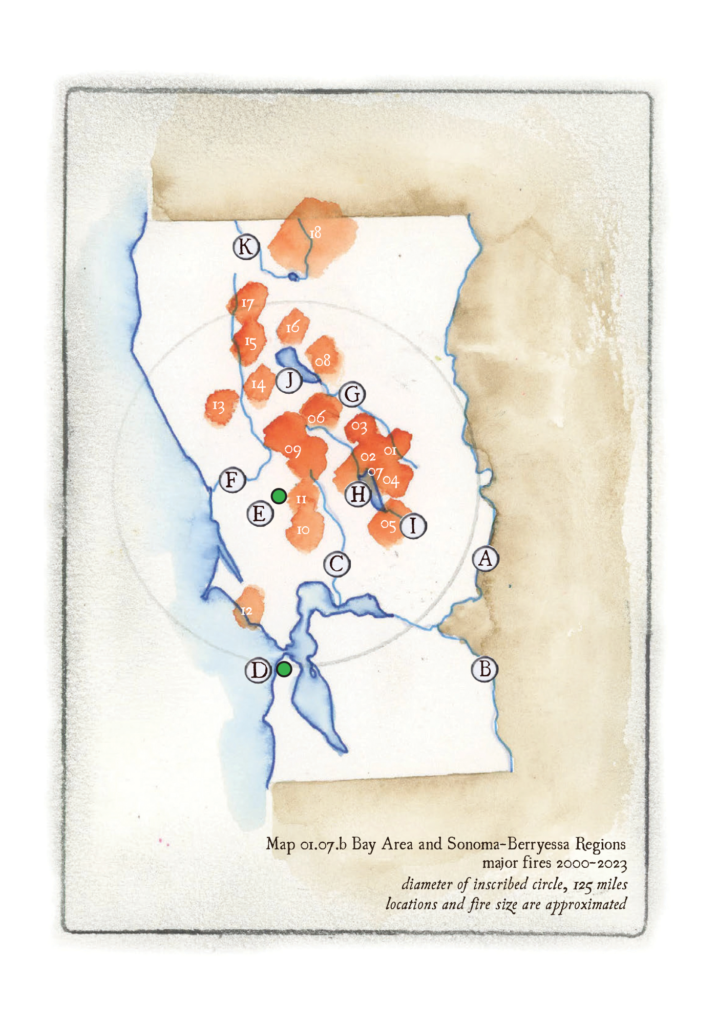
What we have right now is a moment where we can take a breath and say, What is the best course forward to maintain this incredible wealth, represented by California’s endemic biodiversity, across these precious landscapes? It turns out that the relationship of fire and water are key in approaching something navigable heading toward the end of the 21st century, where we might find ourselves with a California in better shape than we left it at the end of the 20th. I think that is entirely doable, even with the slings and arrows of the coming climate collapse.
TRJ Tell us more about these watercolors and illustrations.
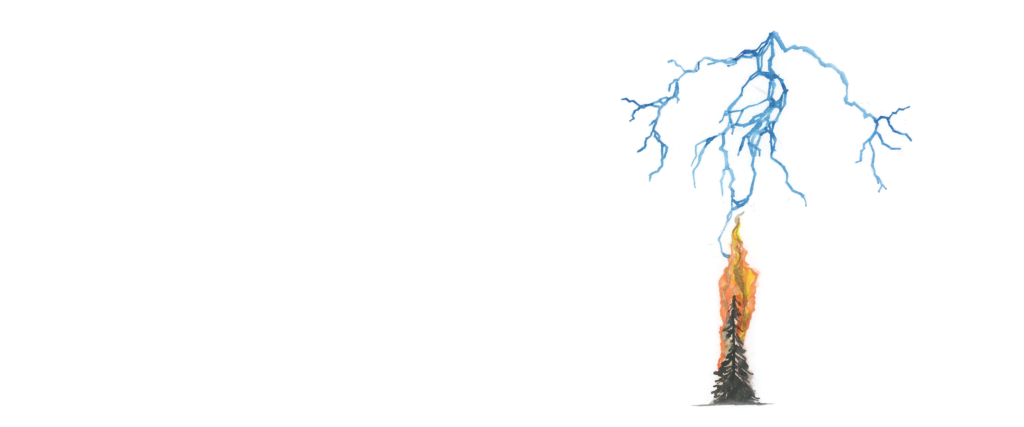
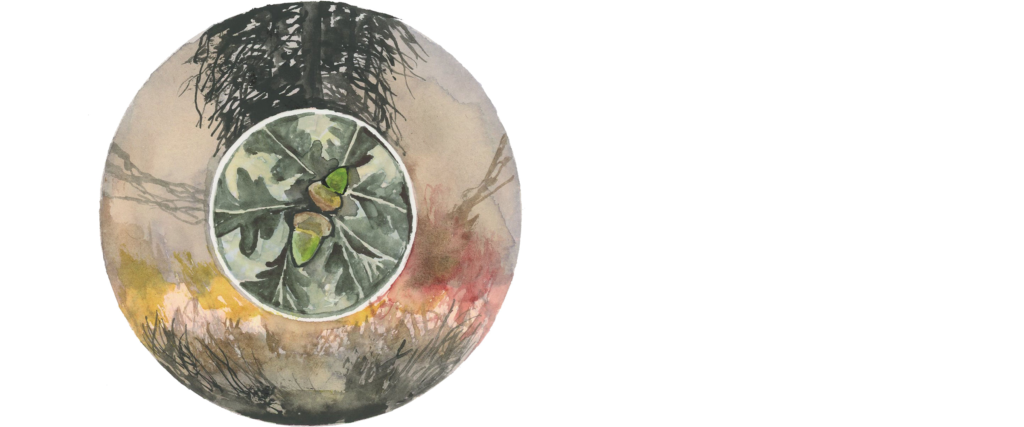
OK There’s something about translatable meaning in a well-rendered piece of wildlife art, and I’ve chosen a particular modality that is probably something like a calligraphic style. These are not scientific illustrations. I don’t care much about biological color. It’s all watercolor on paper, but I’ll paint with anything. I’ll paint with beer. I’ll paint with wine. I’ll paint with coffee. The thing that I do has morphed over the decades. My father was an astrophysicist, so I actually have a lot more training in math than I do in art, and yet, I took up the brush at a very early age, almost in rebellion to my father. So, where he would say, “Mathematics is the language of reality,” I would rebut with: “And yet beauty, Father.”
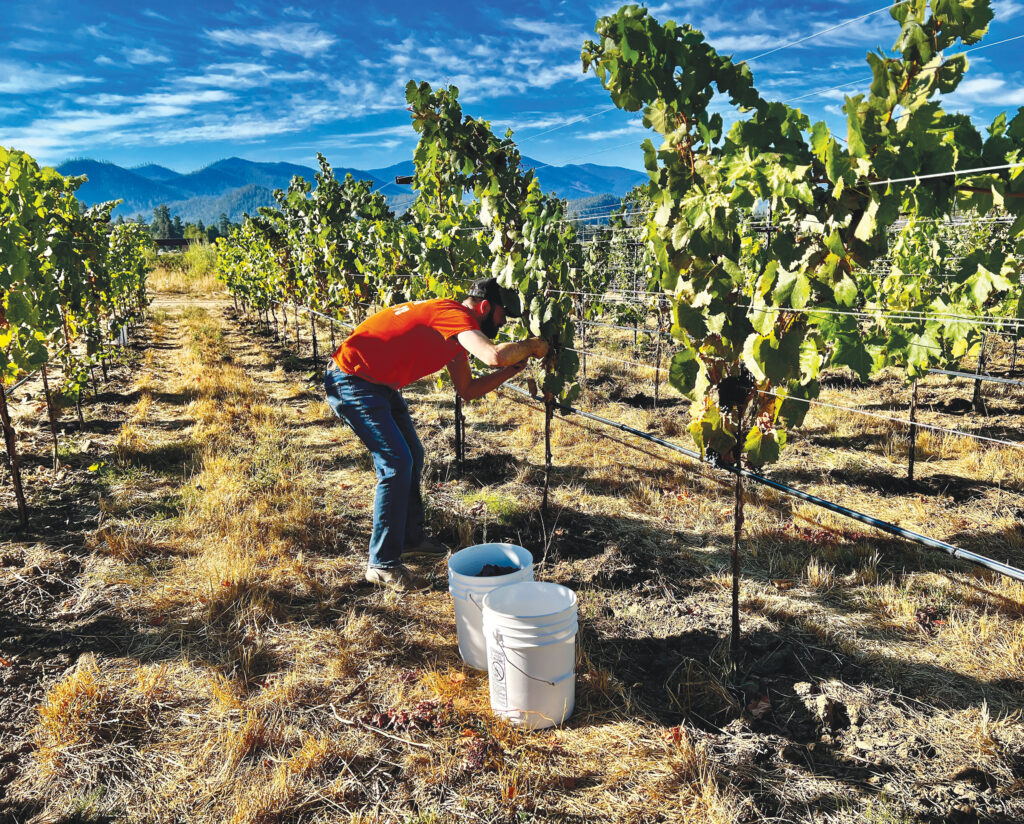
by Chloé Pantazi-Wolber