Vintners are among those leading the way in regenerative agriculture. The farming approach is focused on promoting soil health through a number of natural practices, such as planting cover crops, integrating grazing animals, and ditching pesticides in favor of chemical-free alternatives.
A study published this January in Frontiers in Sustainable Food Systems, coauthored by Jessica Villat and Kimberly A. Nicholas, found that a mixture of these methods can lead to greater carbon sequestration (in which carbon dioxide is captured and stored in soil), particularly in vineyards.
A number of wineries that embrace regenerative farming are seeing the results themselves through soil testing. They say the approach has led to healthier soil and land for the animals and people around it — and even better-tasting wine.
Learn more about how wineries in California and Oregon are showing the rest of the industry how to grow grapes that result in delicious wine while making a positive impact.
Los Olivos, California
photographs courtesy of Solminer
solminer.com
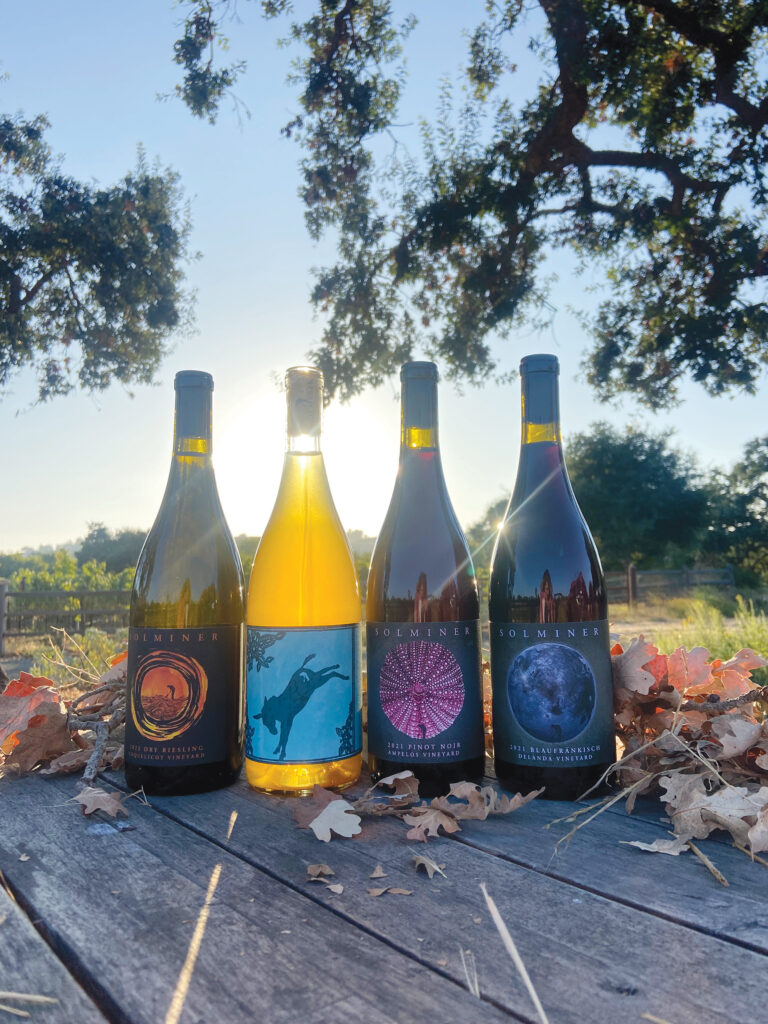

1. Don’t miss a drop with Solminer’s wine club.
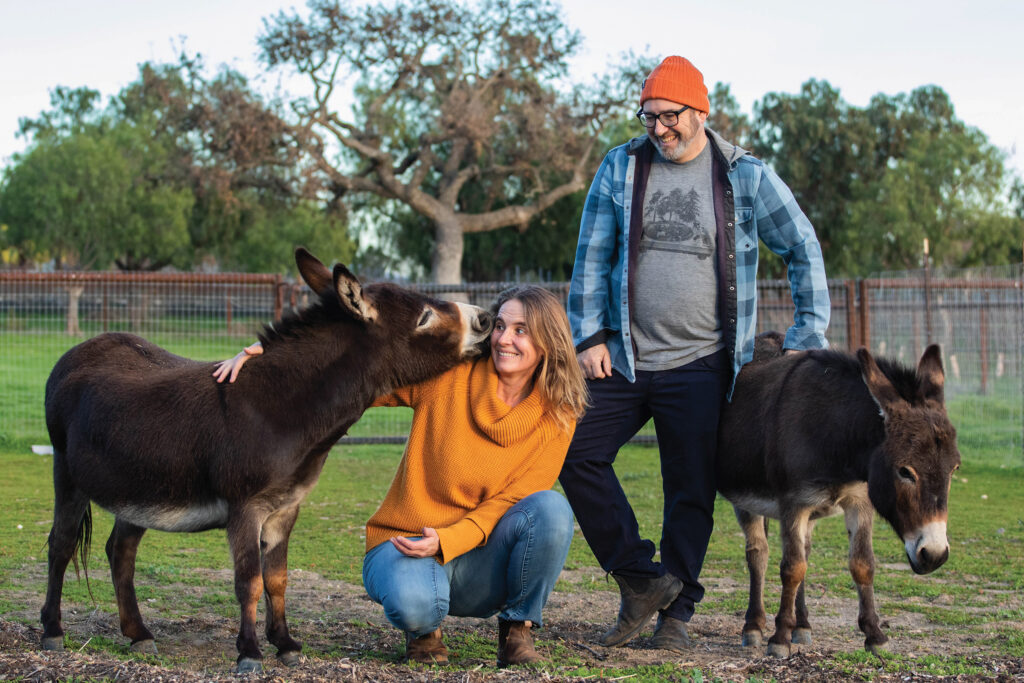
2. Anna, David, and their mini donkeys.
3. Solminer avoids pesticides even if it means sacrificing crops.
The story of Solminer began in 2009, when Anna deLaski, an Austrian expat in Los Angeles, met her now-husband David and they visited the Santa Ynez Valley in Santa Barbara wine country.
Struck by the region’s beauty, they returned to the Central Coast for their honeymoon in 2011, where they tasted some Grüner Veltliner in a restaurant, and saw on the label of the bottle that the white-wine grape, popular in Anna’s native Austria, had been grown in the area. It was then that she and David thought, “Wouldn’t it be fun to make one barrel of Grüner?”
In 2012, the deLaskis went back to Santa Barbara County to buy four acres of land — including two acres of vineyards — in Los Olivos where they began growing their own grapes. Without professional experience in wine (Anna worked in wood engineering, and David in the music industry), they began taking winemaking classes at UC Davis. Then in 2016, the couple bought the horse farm next to their land, expanding their estate to 12 acres — including five acres of vineyards.
“My passion with whatever I did was to do it as sustainably as we can,” Anna says. She’s brought that approach to Solminer, with a commitment to regenerative farming practices and biodynamics. “The more philosophical question that I asked myself is, ‘Can we rethink agriculture in a way that doesn’t destroy the ecosystem?’” she says. “Can we have an agricultural system that lives in harmony with the rest of the land and humans and animals?”

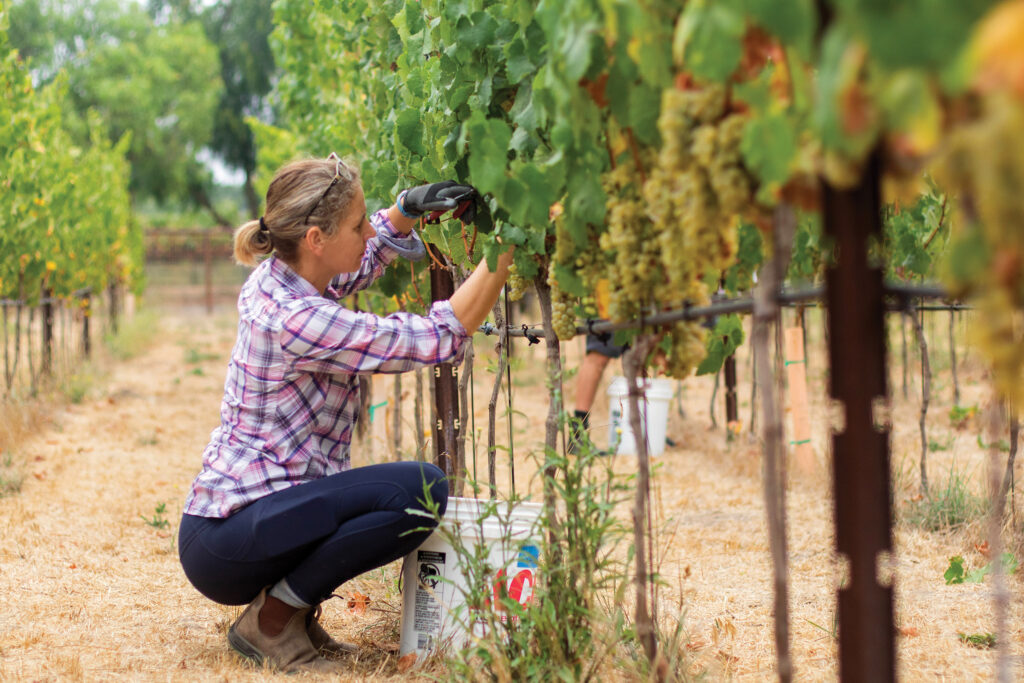
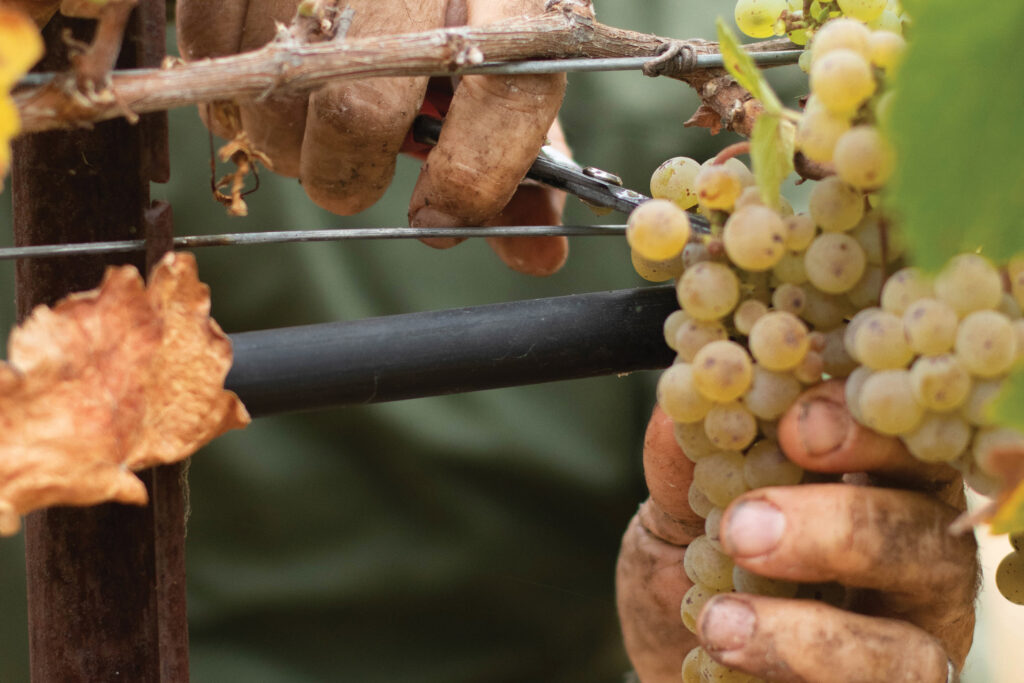
1. Anna at harvest time with grapes destined for one of Solminer’s delicious varieties.
2. Healthy grown grapes start with the soil.
3. Chickens double as both fertilizer and pest control.
At Solminer, the answer seems to be yes. And it all starts with the soil. “It’s almost like an immune system,” Anna says. “We foster the soil life just as much as we steward our vines.” To do so, Solminer nourishes its soil with a homemade compost and sheep grazing among the vines. “Integration of animals is really important for a functioning farm,” Anna says. Solminer also embraces biodynamic preparations, such as cow horns filled with manure (which are buried in the soil for months) and horsetail tea, which prevents mildew in the growing season.
Avoiding pesticides is key to maintaining soil health as well — even if it means sacrificing crops that get impacted — though Solminer has largely been able to combat pests naturally by planting habitats for predatory insects that eat their prey. “It’s a change in mindset,” Anna says of the chemical-free approach. She adds that with a regenerative model, “there’s some give and take” and it’s not about maximizing profit and crops at all costs, but rather serving the land as well as the animals and people around it.
That ethos hasn’t slowed Solminer down, however. The business produces about 2,000 cases of wine each year, with half coming from Solminer’s own grapevines and the remainder from other local, organic vineyards. As well as its popular Grüner Veltliner, the winery sells a number of other white, red, rosé, orange, and sparkling varieties, which come in light bottles sealed with just a cork to minimize waste.
Applegate Valley, Oregon
photographs courtesy of Craig Camp
troonvineyard.com
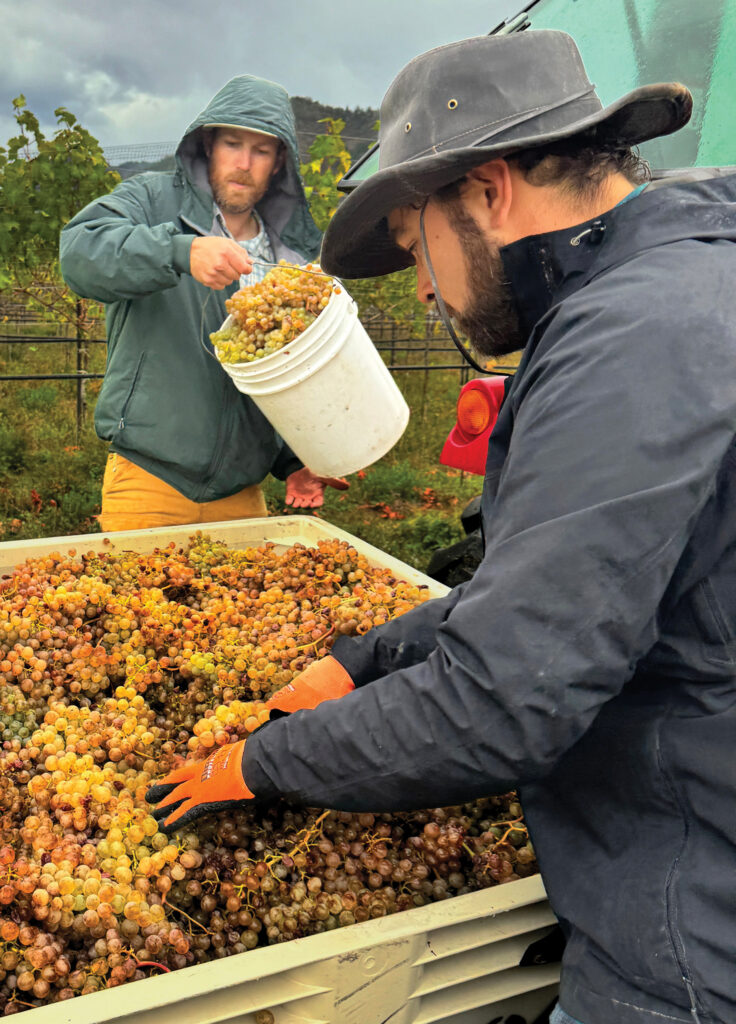
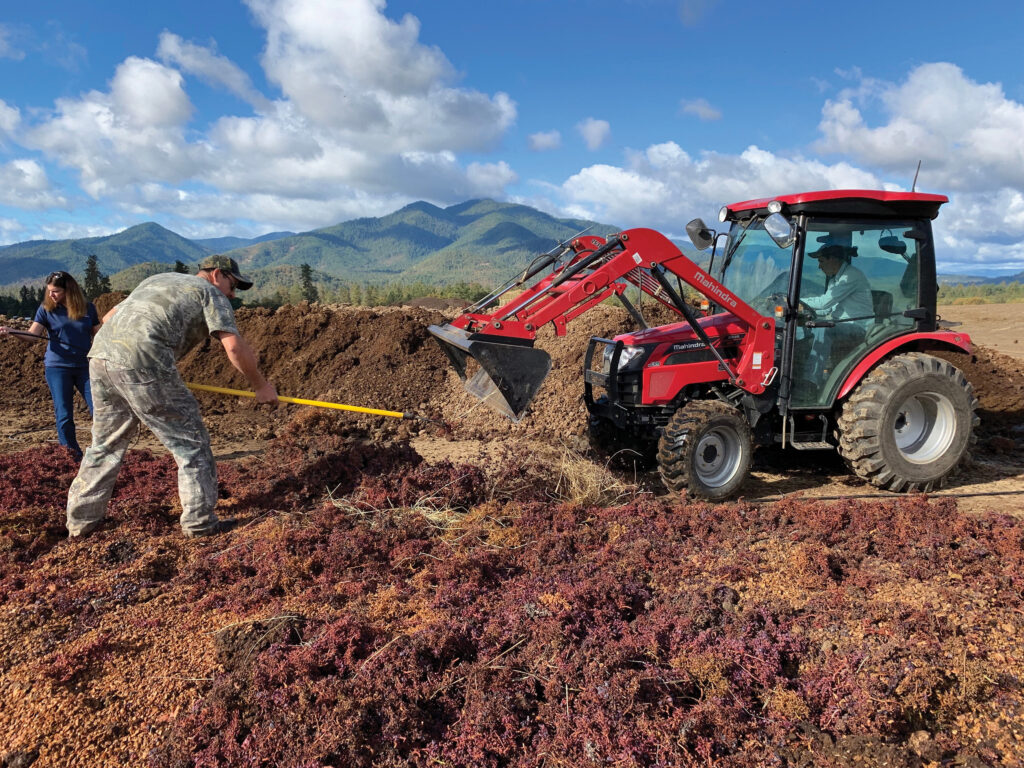
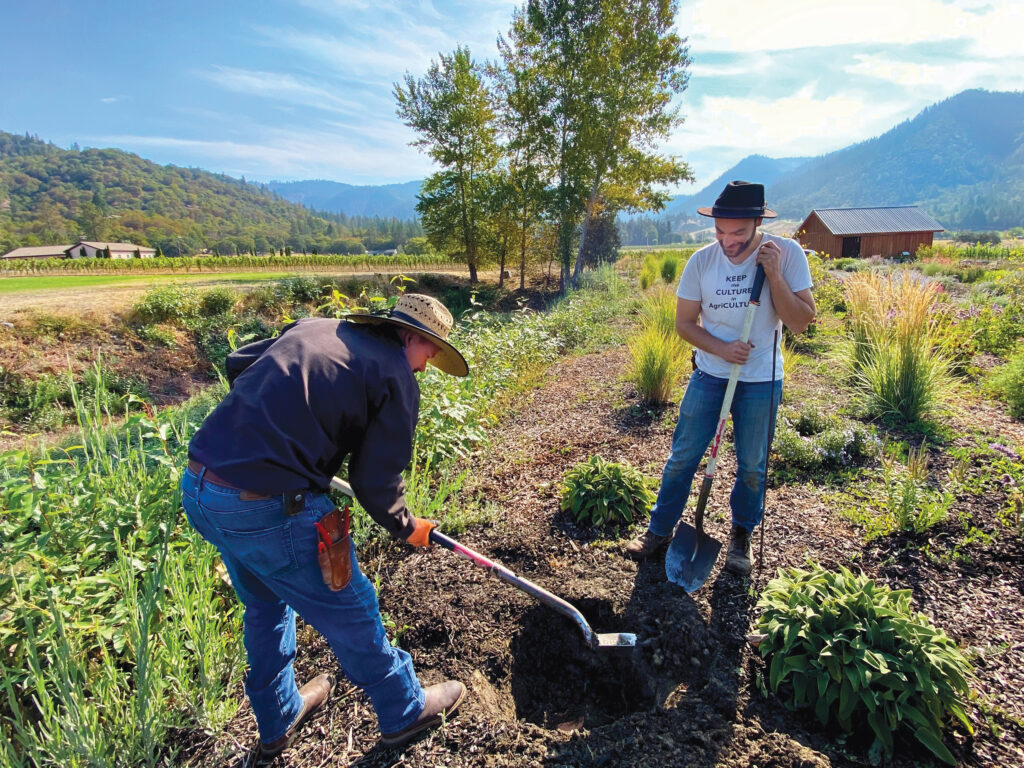
1. Pomace fresh from the press is added to a new compost pile. Everything from the harvest is recycled back to the soil.
2. Farm manager Adan Cortes (left) and Director of Agriculture Garett Long (right) dig up finished stinging nettle, which fermented underground over the winter.
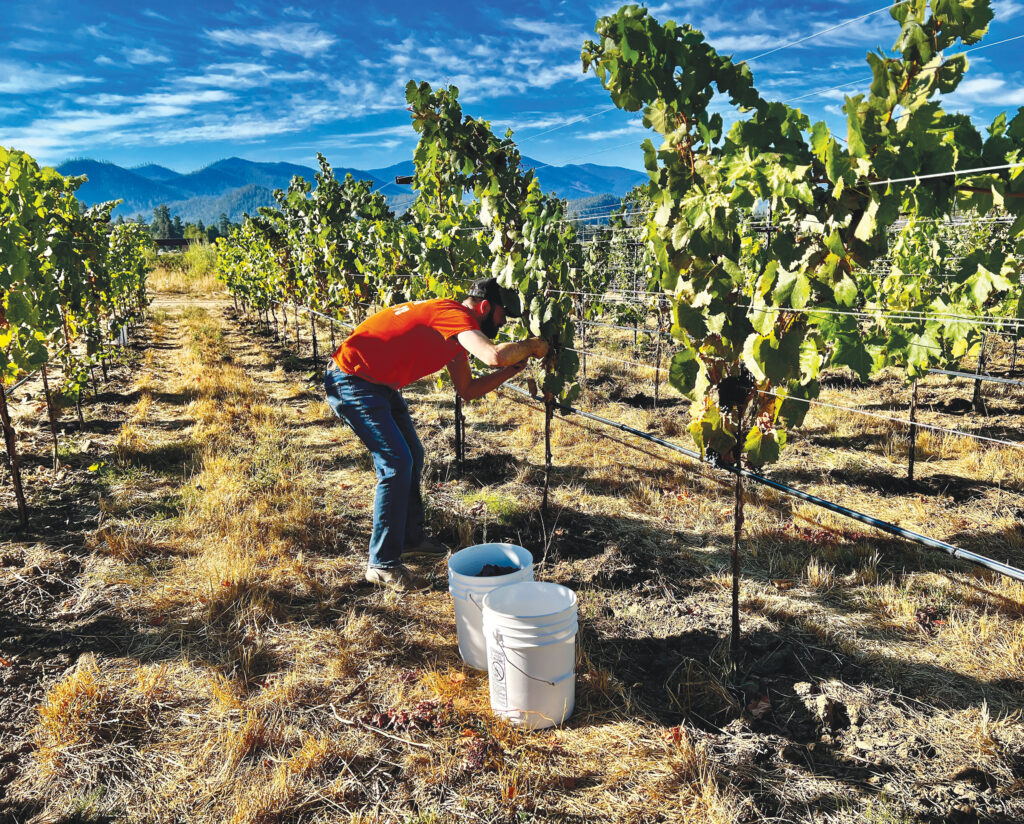
3. Jason and Garett harvest Vermentino grapes.
Troon Vineyard’s roots date back to 1972, when Dick and Virginia Troon owned the property and grew grapes they sold to wineries in the area. Today, the Applegate Valley vineyard produces thousands of cases of its own wine — available in red, white, orange, rosé, and sparkling varieties — each year.
Craig Camp, Troon’s general manager, came on board in 2016 to help revitalize the farm. Camp describes himself and the team there “as practical biodynamic practitioners,” and notes that both the company’s director of agriculture Garett Long and winemaker Nate Wall have master’s degrees in science; Long studied soil science, and Wall environmental studies. While Camp acknowledges that “there’s a heavy spiritual side to biodynamics,” alluding to Rudolf Steiner (who introduced the holistic agricultural approach to farmers in 1924), Troon’s manager says the mindset at the winery is that “you practice these [biodynamic] procedures and then you connect with the spirituality of the farm, not the other way around.”
Nourishing the soil is, of course, essential — and integral to the quality of the wine Troon produces. The vineyard applies a mix of year-old compost, fresh manure from a neighboring dairy farm, and biodynamic preparations including cow-horn manure to the soil to keep it healthy. It also embraces rotational grazing with sheep and chickens to interact with the soil, with the latter helping with pest prevention as they dig through manure for bugs and other pests.

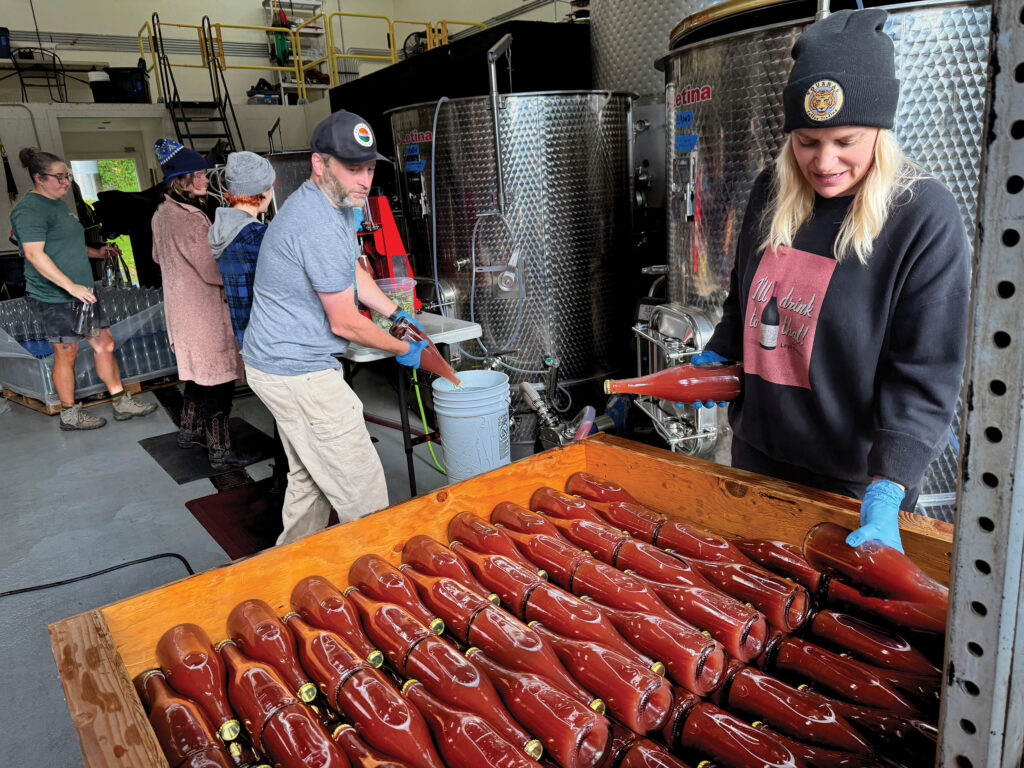
1. Winemaker Nate Wall (left) and Farm Sales Director Jennifer Teisl (right) load Pétette into tirage bins.
2. Tannat wine grapes.
The farm releases natural predators such as lacewings to combat pests as well. “You want to create a natural soil system, the way that nature intended these things to work and then a natural plant system for the same reason,” Camp says, adding that “working together, they will create more healthy fruit which obviously will make better wine.”
Troon is making other efforts to make a positive impact as it makes wine. The business is in the process of converting its farm equipment to electric, Camp says, with a goal to be carbon neutral, and this year Troon is getting a solar system installed to offset all of its power usage. It also embraces recycling and composting, and uses light bottles for its wines; Camp notes that the lightest bottles the team at Troon could find come from Spain and China, but they use bottles from Oregon instead to lessen their carbon footprint. In addition, the winery plans to experiment with an initiative where customers can bring reusable bottles back to the winery to be washed and refilled later this year.
“We’re not going to change the world by what we do. But hopefully we can convince other people that this is the way to farm,” Camp says, adding that Troon has found its practices not only result in better and more nutritional produce, but can also be made economically viable. Bottom line, Camp says of regenerative farming, “it’s really important that you could do all this and still make great wine.”
What is regenerative farming? The Regenerative Organic Alliance defines regenerative agriculture as “a collection of practices that focus on regenerating soil health and the full farm ecosystem.”
Elizabeth Whitlow, executive director of the ROA, adds that it’s “a holistic approach to farming that is site specific.” When applied at a particular site, the approach should be “appropriate to that farm’s context and where that farm sits on this planet,” taking into account its “specific conditions, climate, and cultural practices,” she says.
The essentials:
Ditching pesticides
“We don’t believe it’s regenerative to apply pesticides and herbicides and synthetic fertilizers,” Whitlow says. “Those are typically proven to kill the soil microbiome.” Instead, regenerative farming is about nourishing soil health, which Whitlow compares to the microbiome in our gut. Instead, effective pest management can include integrating grazing animals and insects that like to eat pests.
Cover crops & no tilling
In conventional vineyards, there can be “very old-school” thinking that “the floor of the vineyard should be clean, cultivated, tilled, clean of weeds,” Whitlow says. “But what happens when you do that is you’re exposing the soil and that basically kills the soil’s microbiome because of the sun hitting it.” In the world of regenerative farming, Whitlow says, “a very diverse cover crop in-between the perennial vines” is “one of the most important tools” for soil health. Cover crops help prevent soil from drying up, give grazing animals a place to deposit nutrient-filled manure, and attract beneficial insects that prey on pests.
Grazing animals
Animals can be hugely beneficial to soil by “adding fertility to the land” and “controlling the weeds,” Whitlow says. In the case of vineyards, having smaller animals like sheep and chickens roaming the land can help as they graze the cover crop and fertilize the soil with their nutrient-rich urine and dung. They also help activate the soil’s microbiology with their saliva, plus they help keep pests at bay by pecking at bugs.
SOCIAL FAIRNESS
Another important, often overlooked, aspect of regenerative farming is the treatment of farm workers. Farms that are Regenerative Organic Certified are required to pay laborers a fair wage based on the cost of living where they’re based, and there are measures in place for farm workers to report harassment and ensure they’re being treated fairly. As Whitlow says, “how the farm workers are being treated is just as important as how the soil is being treated.”
Hopland, California
photographs courtesy of Bonterra
bonterra.com
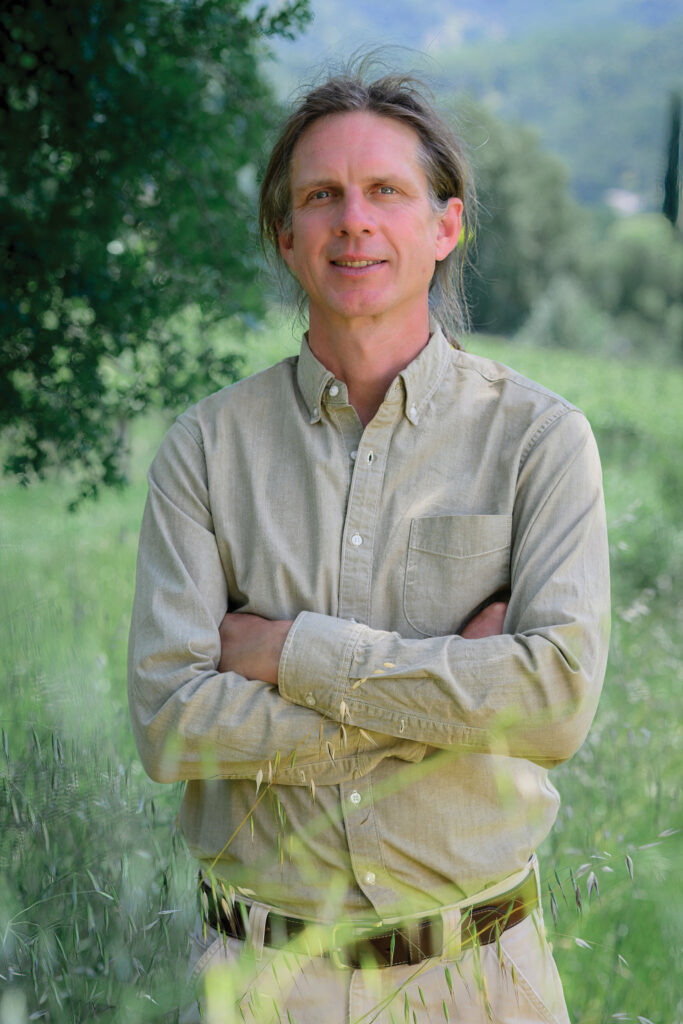

1. Joseph Brinkley, head of regenerative organic viticulture.
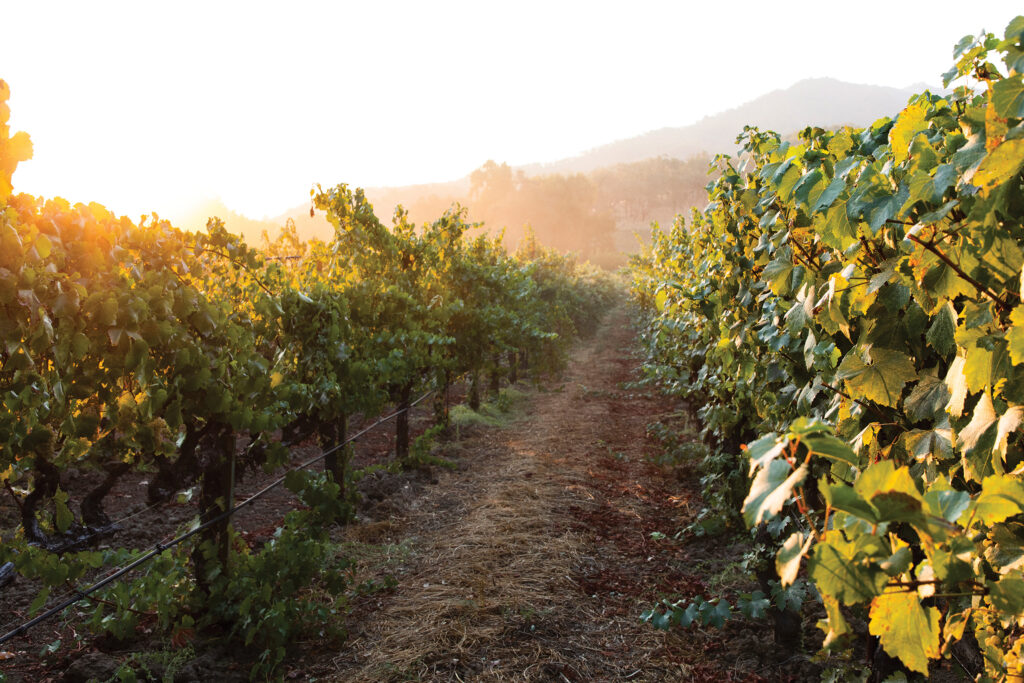
2. The start of a regenerative Bonterra grape.
3. Sheep add fertility to the soil where the grapes grow.
Bonterra Organic Estates is an environmental powerhouse in the wine world, known for its impressive selection of red, white, and rosé varieties. The winery also has certifications for its climate-neutral status, commitment to reducing waste (according to its website, the winery diverts 98% of its refuse from landfills), and regenerative organic farming practices.
Joseph Brinkley oversees the latter at Bonterra as head of regenerative organic viticulture. “It feels like a good contribution,” he says of regenerative organic farming, “not only in one’s consumers’ happiness from drinking lovely wine but also in the impact we’re having in the field and on people and communities’ lives.”
At Bonterra, the “field” makes up a vast amount of land; the winery covers some 2,000 acres across California’s scenic Mendocino County, including about 850 acres of vineyards, including in the mountains, flatlands, and alongside a river, Brinkley says. Not all of Bonterra’s vine land is contiguous, which “really gives us versatility in what we grow,” the viticulturist says, adding that this lends complexity to the flavor of the fruit in the blending phase as well.
Bonterra’s impact in the field begins with the health of its soil. Brinkley thinks it’s important to note that while “you could add, say, your main nitrogen, potassium, phosphorus from a bag of synthetically derived chemistry” to the soil, “you can also, though, get these essential nutrients or this fertility from more natural kinds of processes and cycles.”
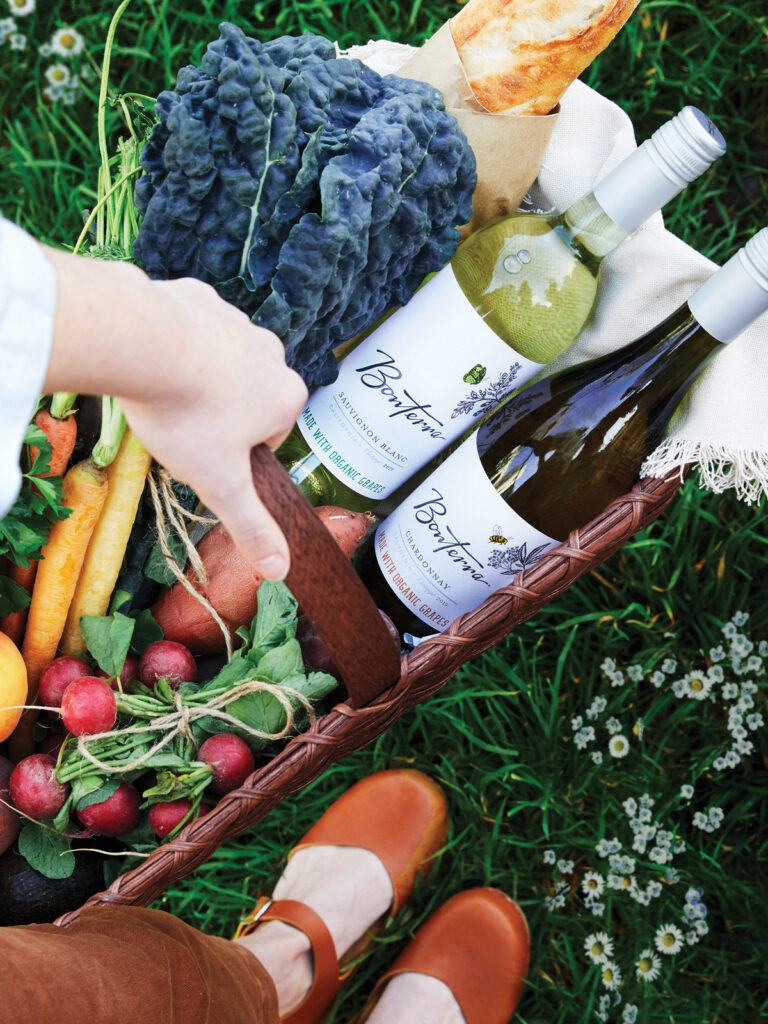
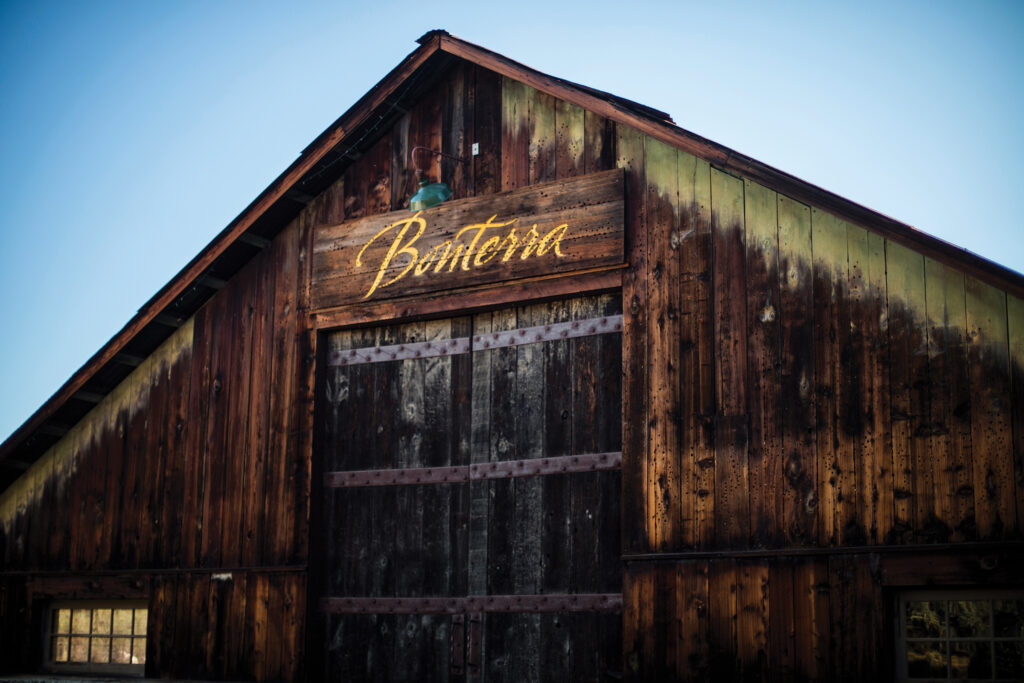
1. The Bonterra barn that often doubles as a space for regenerative organic workshops.
2. A Bonterra basket of earthly delights.
Instead of using chemicals, Brinkley says, sheep add fertility to the soil by munching on the cover crop and depositing their urine and dung. They even help handle some of the farm work. “Not only do they add fertility by metabolizing, they also take some of the work from the tractors we would be using,” Brinkley says. “So instead of using a tractor to mow and do some vine cultivation, we pass the sheep through a few times.” Compost, made from grape pomace, is also added to the soil — an example of how Bonterra reduces waste and embraces a closed-loop system that’s as close to the cycle of nature as possible.
Brinkley feels just as passionately about the positive impact that regenerative organic farming has on labor workers. “The Regenerative Organic Certification has a really big focus on labor, a living wage, fair and equitable treatment, fair pay and compensation,” he says, adding that the goal should be that “every single person that goes to work comes home at least as good, if not better than they left.”
“It’s a people-driven business,” he says. “You can’t do any of this without the people.”
Paso Robles, California
photographs courtesy of Tablas Creek
tablascreek.com
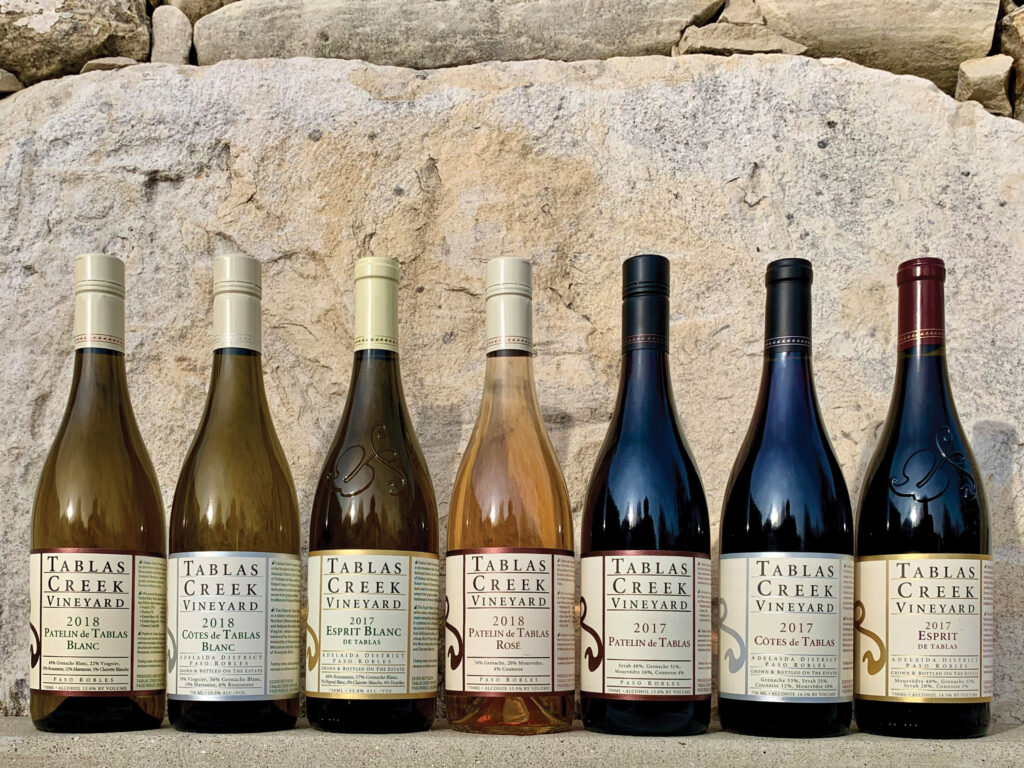
1. Three tiers of Tablas Creek blends.
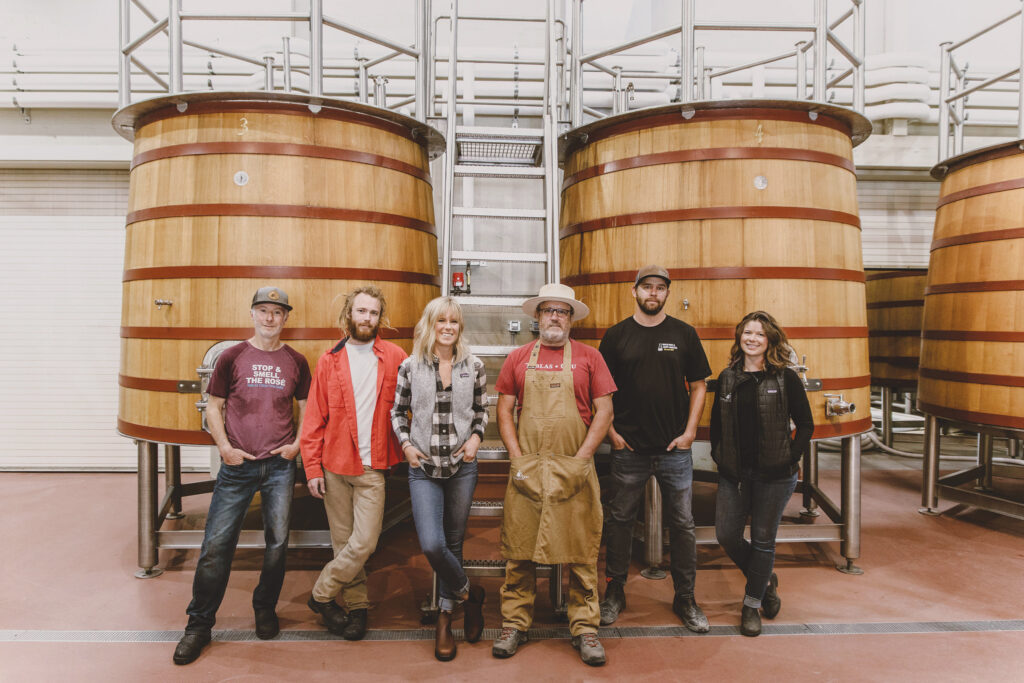
2. The Tablas Creek cellar team.
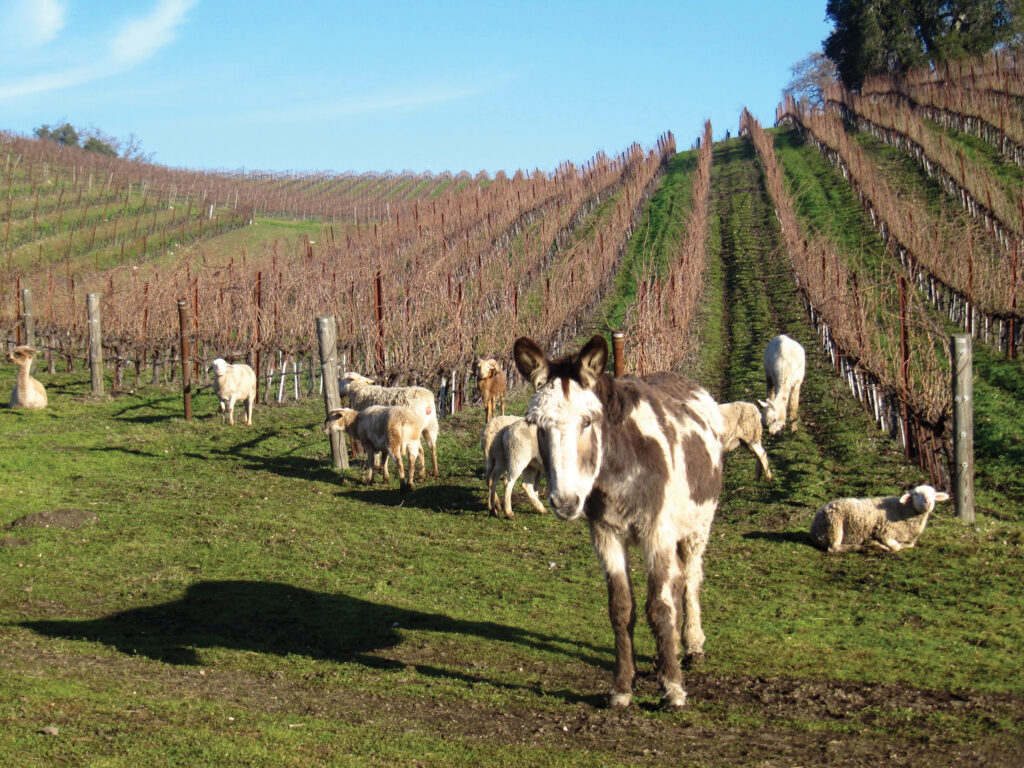
3. Every animal plays a part like these grazing in the vineyard.
Regenerative farming is about the land and the animals, of course — but it’s also about the people. Jordan Lonborg, the vineyard manager at Tablas Creek, thinks the social aspect of regenerative farming doesn’t get talked about enough and points to how the agricultural approach was founded on a concept of soil health, as well as animal and social welfare.
“It’s really one of the main reasons why we went down the road for certification with Regenerative Organic Certified,” he says, adding that the certification from the Regenerative Organic Alliance requires farms to pay workers a living wage. That amount is determined by MIT’s Living Wage Calculator, which generates figures based on various expenses including housing, medical, and childcare costs by area. “We do everything we can to get to that number,” Lonborg says, so that everyone at the Paso Robles vineyard is paid a living wage.
Tablas Creek has also embraced the sense of community that comes with an emphasis on social welfare. That translates to more communication in the form of staff meetings with all of the vineyard crew, and adopting “a collective mindset rather than having a handful of people dictating what needs to be done in the vineyard,” according to Lonborg. “They are in the vines every day, day in, day out. They touch every plant on the property,” the viticulturist says of the vineyard workers. “It’s kind of crazy not to take into account their observations. So part of this regenerative mentality is listening.”
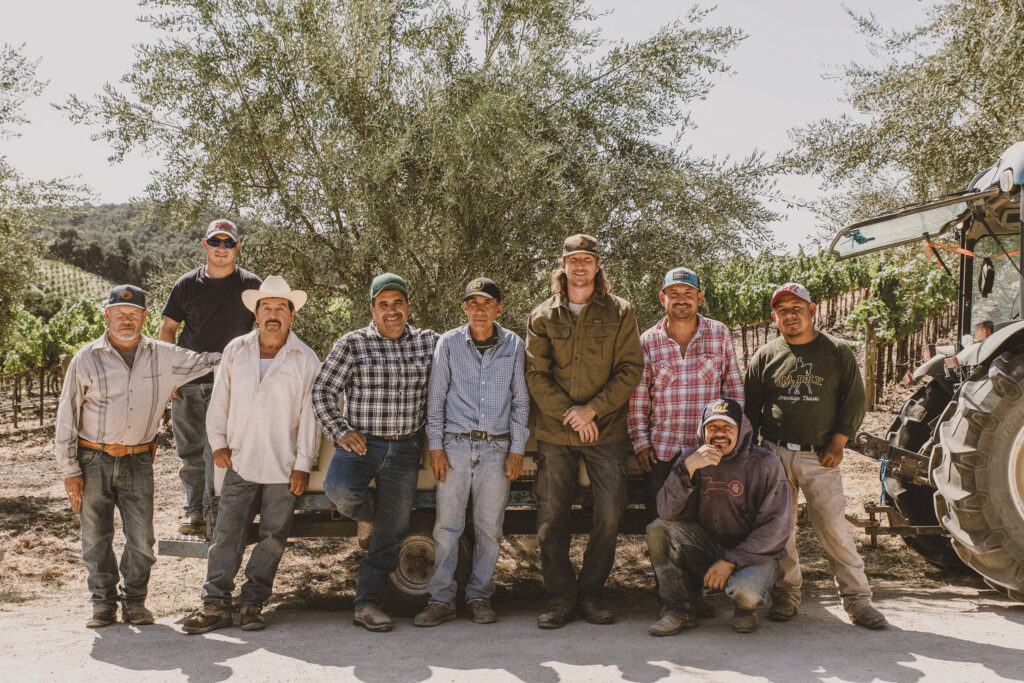
The Tablas Creek vineyard team.
As well as taking care of the people working on the land, the animals that tend to it are at the core of Tablas Creek’s soil-fertility program. Sheep graze the land, cleaning up any of the plants on the ground that need to be dealt with, Lonborg says. The vineyard’s cover-crop program is also essential to optimizing soil health, and strives for a diversity of plant life to attract pollinators and beneficial insects.
Beyond the farm, the winery has taken steps to minimize its carbon footprint, such as packaging its wine in lighter bottles to reduce weight during shipping — with an annual production of between 12,000 and 15,000 cases of its red, white, rosé, and dessert wines, Lonborg says it’s made “a considerable impact.” Tablas Creek also captures and recycles its gray water; Lonborg notes that “wineries use a ton of water, whether that’s for cleaning barrels or cleaning tanks,” and by pumping that water into a series of ponds, they can reuse it for a variety of purposes, like hydrating the compost pile, extinguishing biochar kilns, and keeping dust at bay outside. It’s just another example of how the company has embraced the biodynamic principle of a closed-loop system.