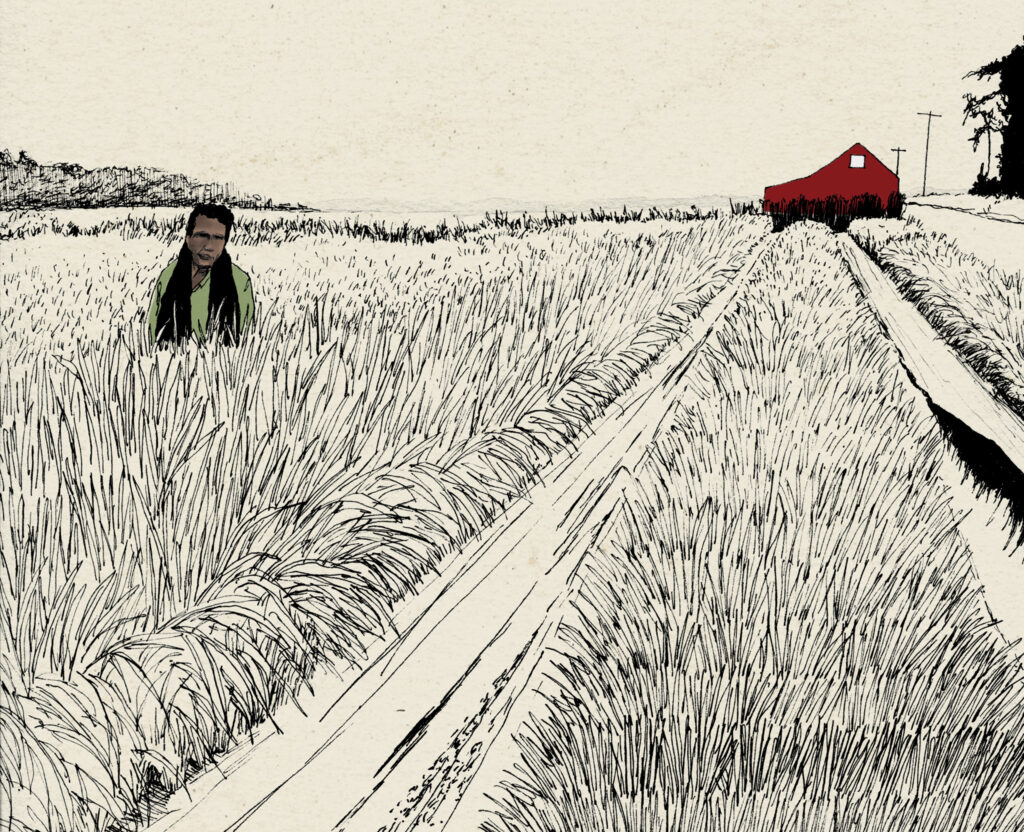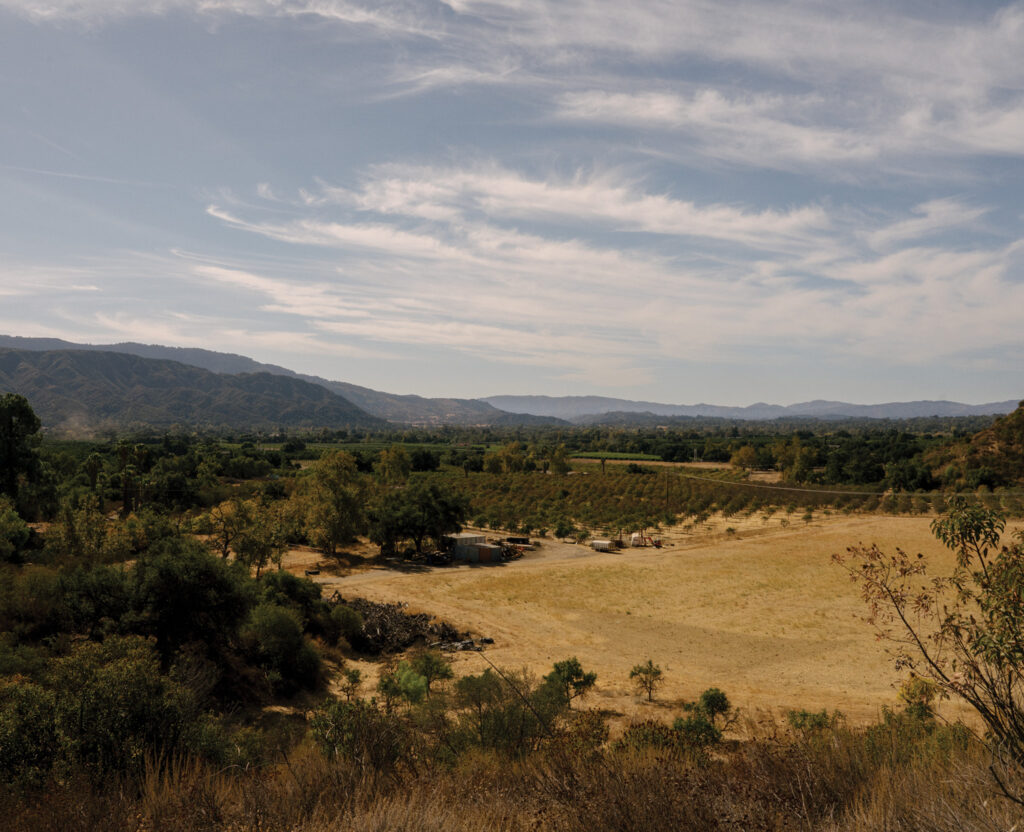
Just a few miles inland from the California coast is an idealist’s enclave, the tiny town of Ojai. With your back to the ocean, a two-lane highway meanders through sturdy oak forests, pungent eucalyptus, and groves that boast sun-kissed citrus, avocados, oranges, and award-winning tangerines you can find for sale at cute roadside farm stands. For a few bucks and your honor that you won’t grab more than the often hand-painted signs say, you can indulge in fruit as sweet as the memories you make during your visit. As you take in the 360-degree view, the Ojai Valley delivers on the promise of rural charm you can expect from California.
It’s here that I met Kali Coultas on her ranch last summer, at a soil workshop hosted by Understanding Ag, an entity committed to helping farmers and ranchers build soil and dig deep into the benefits of regenerative agriculture. Coultas’ enthusiasm is infectious, and within minutes it felt like we were old friends, especially as the small team of farmers and the workshop attendees walked the recently mulched orange orchards, testing soil temperatures and grabbing handfuls of decaying matter containing everything the trees need — just add water.
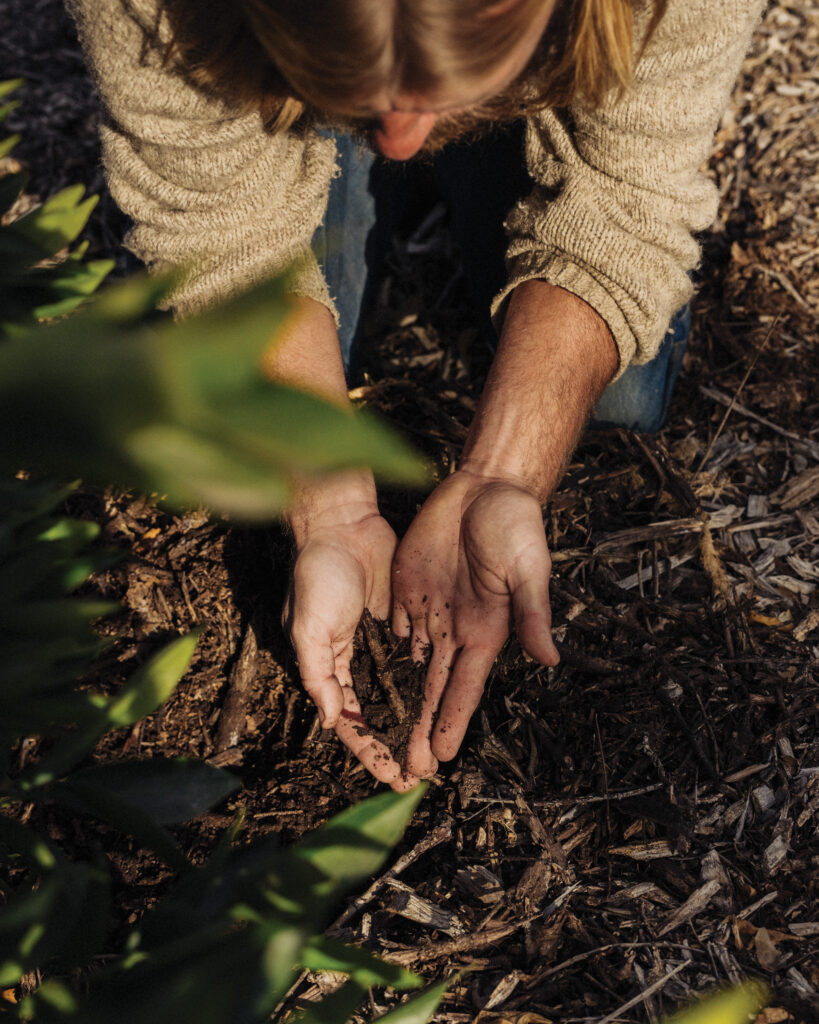
Connor Jones demonstrates the rich soil being built by regular mulching in the orchards.
A few months later, Coultas and I reconnect to walk through the pasture she is starting to populate with regionally adapted cattle. The short, dry grass crunches under our feet; it’s the tail end of the area’s dry season. Beyond adding mulch, the growing herd is part of her rotational grazing plan to help turn the farm organic and rejuvenate the soil as the bovines move from one area to the next, dropping nutrient-rich dung as fertilizer. Coultas’ neighbor and friend Connor Jones and consultant Loren Luyendyk join us, each sharing stories of their roles on the property.
“Connor’s buffalo wandered down here,” Coultas says. “They had gotten out one day, and they just showed up on our property. We corralled ’em and put ’em in the arena. That’s how we became better friends. And the buffaloes pretty much stayed forever.” Jones, who has a degree in permaculture, and Luyendyk, whose career is steeped in organic agriculture, have joined Coultas in transforming the ranch, embracing all the help they can get to restore the land’s 80-year legacy.
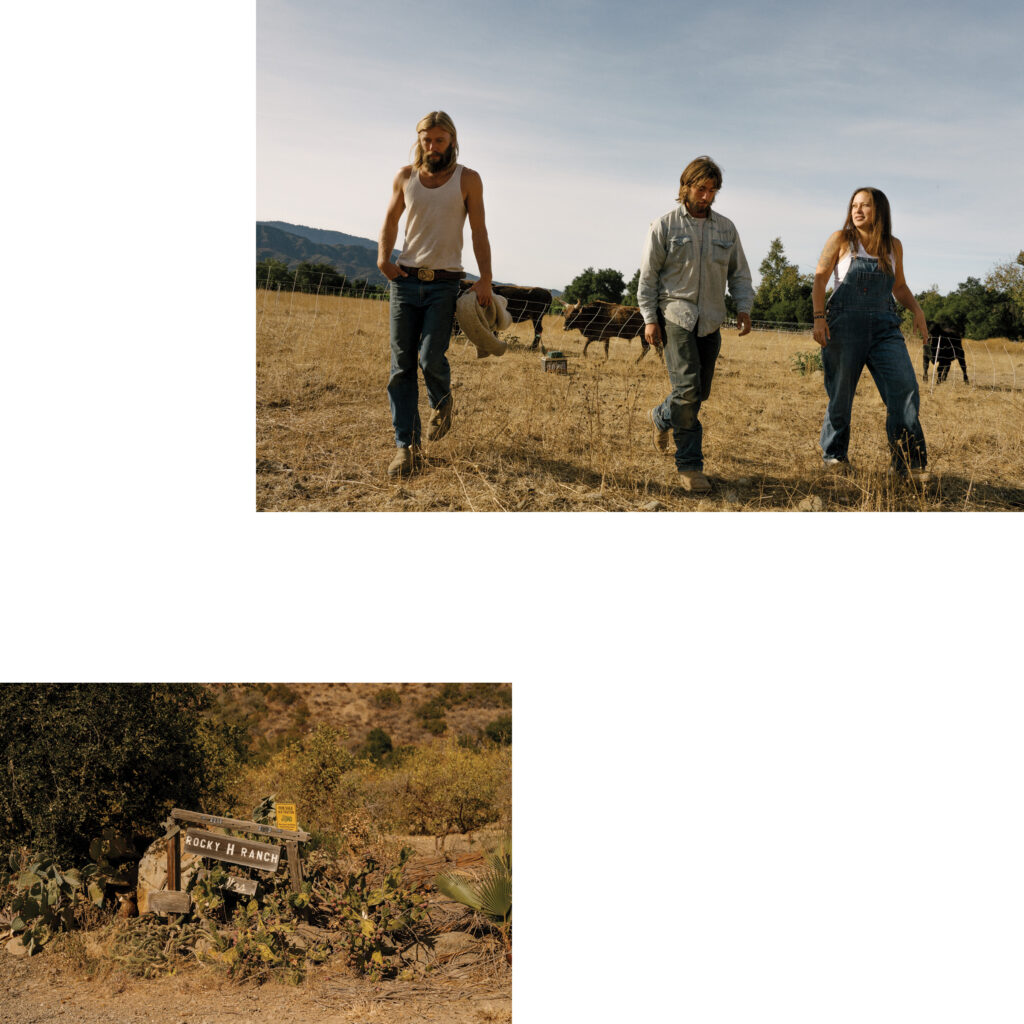
1. The original Rocky H Ranch sign.
2. Jones and Coultas lean on a number of friends to aid in the livestock management.
IN 1945, DR. RALPH HOMER purchased the Rocky H Ranch from the Stetson Estate for $50,000, envisioning it as a future business for his son, Bill. After tragedy struck — Bill was killed in an auto accident — Dr. Homer turned to his son-in-law, James Coultas, a member of the well-known Coultas farming family of Ventura’s Oxnard Plain. James left his teaching career and moved to the ranch with his wife, Margaret, and their young family. Dr. Homer and his wife, Mable, built a weekend cabin on the property, relying on a small well tucked into the mountain for water.
At the time, orchards were scattered along the hillsides, irrigated by ditches carrying water from San Antonio Creek. James expanded the ranch, planting citrus groves and establishing hay fields to support the ranch’s horses and cattle. He drilled an irrigation well but continued using traditional ditch irrigation for some of the orchards. Oil-burning heaters called smudge pots lined the groves, protecting trees from frost (the method wasn’t updated until 1989, when mini sprinklers were installed). Ojai had its own fruit packing house then, with crates of citrus loaded onto trains bound for Ventura; James played an active role, even serving on the board of directors.
In 1969, a devastating flood tore through the region, causing San Antonio Creek to overflow and destroy the family’s orchards. James’ son, Jim Coultas, received an honorable discharge from the Army to come back and help rebuild the ranch. Jim took over the farm’s operations (where his degree in accounting came in handy) and moved onto the property. Eventually he married Linda, and in 1982 the couple adopted a young Kali.
In 1984, James’ daughter Terry Coultas Wilson returned to Ojai with her daughter, Tracy, and an equestrian business, expanding the family’s presence. Employees became a vital element of the farm as well — foreman Javier Gomez, integral to the business since 1974, has worked the land and raised his family there for 50 years. Over the decades, the ranch changed — in the mid-’80s, Ventura County claimed 13 acres through eminent domain, constructing a debris basin that permanently split the property in two — and aged, requiring extensive work, yet its spirit endured.
Kali’s adoption into the Coultas family profoundly shaped the course of her life. As a child without much knowledge of her biological ancestry, Kali found a sense of belonging in the land itself, spending countless hours immersed in nature. Her father took her on annual camping trips, deep in the wilderness, where they disconnected from modern distractions. It was there Kali developed a reverence for the Earth, often telling her father she would one day make the ranch organic — even if she didn’t yet know how.
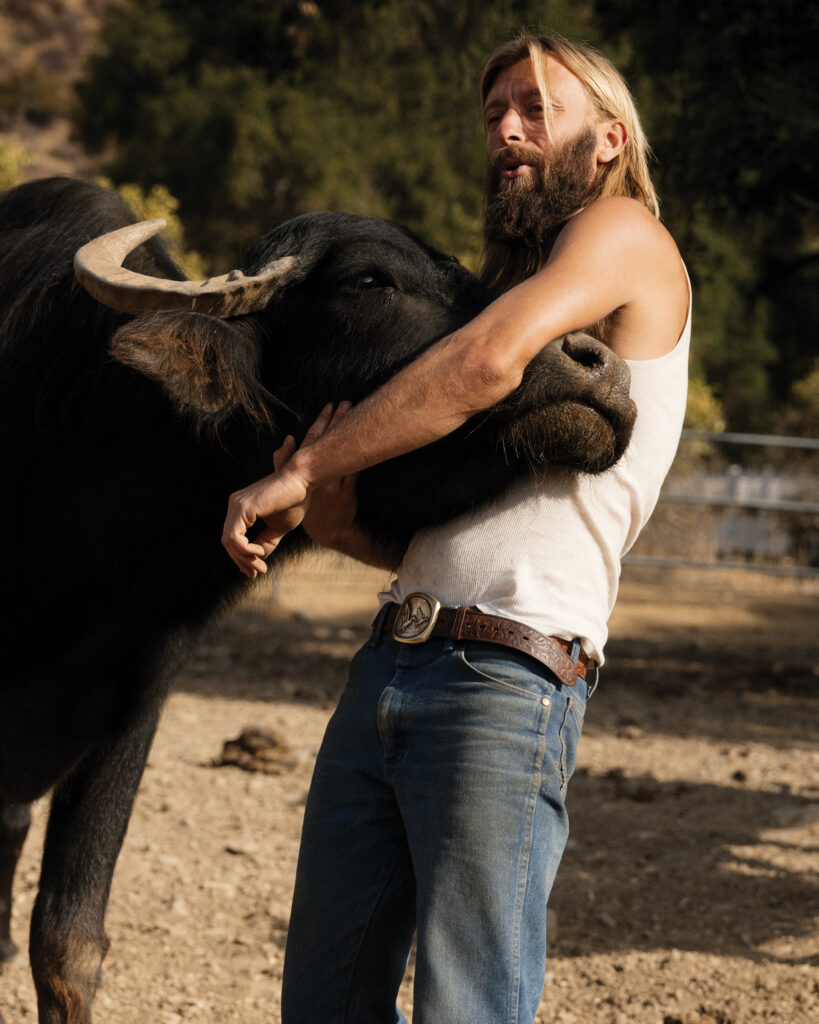
It all started when Jones’ water buffalo wandered onto the land.
THAT VISION WOULD TAKE years to materialize. The ranch faced drought, rising costs, and county pressures to use chemical sprays. In her 20s, Kali discovered her Hawaiian heritage — a revelation that explained her instinctive connection to the land. It affirmed everything she had felt growing up, strengthening her commitment to working in harmony with nature. That meant having to make some tough choices though. For example, in the past five years, much of the farm’s dead citrus was cut down, a painful but necessary decision. In its place, something remarkable happened. As the orchards faded, nature began to heal itself: Tall grasses created natural mulch, deer pressed decaying leaves into the soil, and butterflies, bees, frogs, and worms slowly returned. The land came back to life. Watching the ranch regenerate has been a humbling, life-changing experience, Kali says, proving that with time, resilience, and the right stewardship, the land doesn’t just survive — it thrives.
After meeting Jones through his buffalo, Kali Coultas was introduced to Luyendyk, and soon after, Elevated Foods began to support the ranch’s regenerative transformation. Jones and his team now manage rotational grazing of cattle and sheep. This spring, his new land management business, Ducks in a Row, will introduce ducks into the system to control pests. “The reason we’re using ducks is multifold,” he explains. “But the main reason is that citrus typically is plagued by snails. Ducks love to eat snails. Citrus also needs a lot of fertilizer, and [duck] manure is largely liquid and it integrates into the soil really fast.”
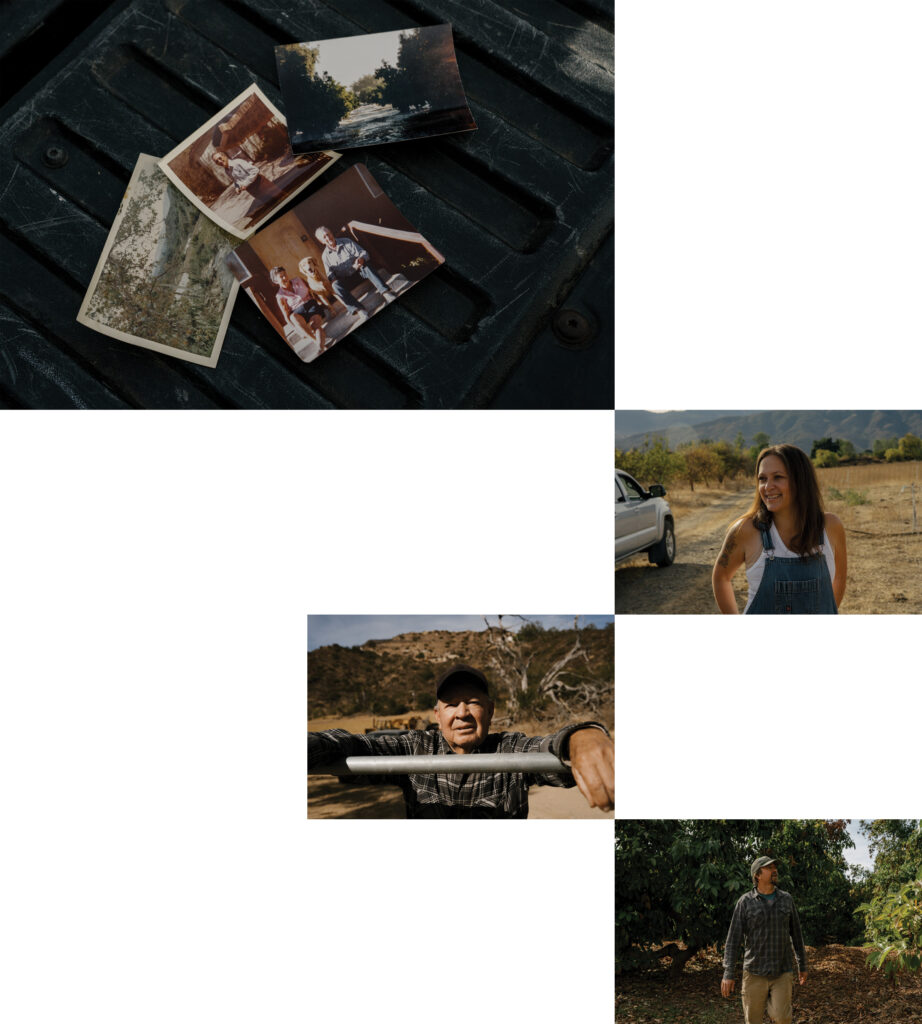
From top: Family photos help capture the legacy of this land. Coultas talks about the ranch’s transformation with hope and enthusiasm. Foreman Javier Gomez has worked the land for 50 years. Loren Luyendyk among the avocado orchards.
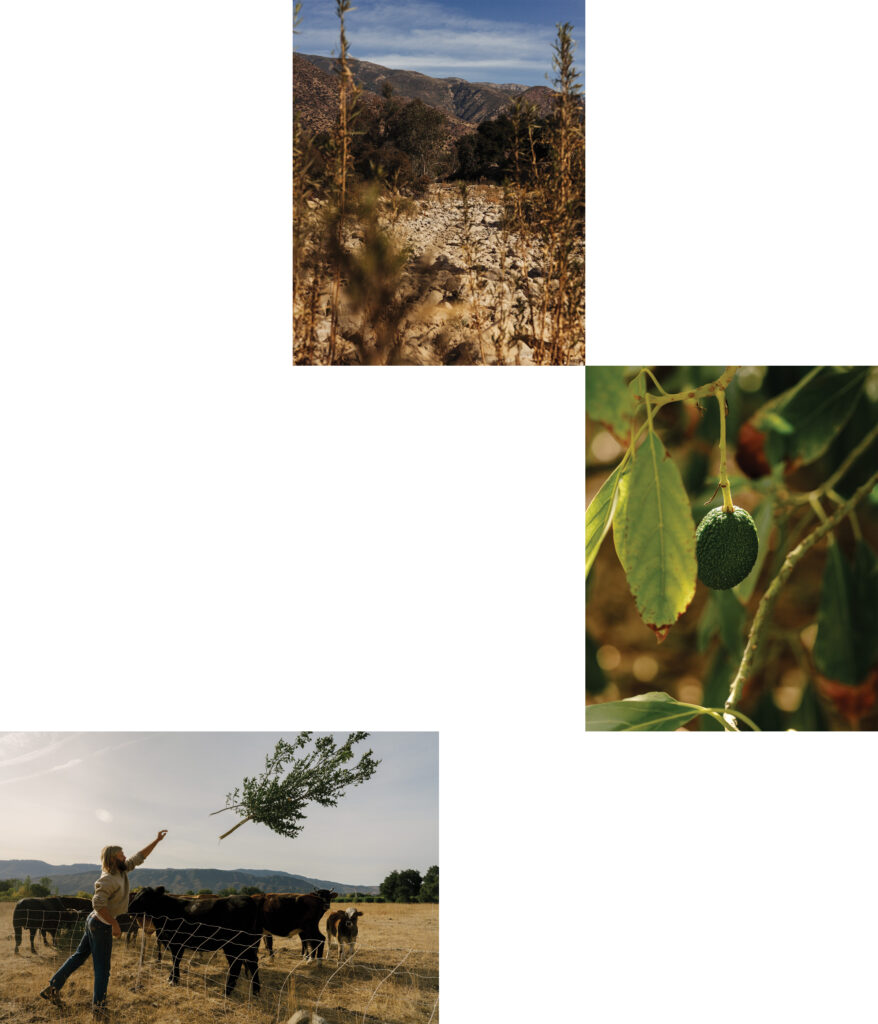
From top: Ojai’s intervention in the way water flows means arroyos like the one on Coultas’ farm often run dry. As a result, “most of the rainfall we get is ineffective,” says Luyendyk. Avocado trees need foot-deep mulch to thrive. Jones tosses cuttings to the cows.
AS WE WALK through the herd of cattle and goats, Luyendyk highlights the valley’s familiar issue: drought and the barren landscape that affects the water cycle. “The big picture is restoring the hydrological cycle to the whole valley. And so we’ve created a drought and flood regime where we have [these] denuded landscapes, which in the summer don’t hold moisture, in the winter don’t soak it in. So we need to restore the hydrological capacity of the soils so that when it rains, we get effective rainfall,” he says. This strategy accounts for longer and hotter summers, erosion, and unpredictable rainfall. By building healthy soil, water is less likely to evaporate off the surface of compacted dirt. “One unit of organic matter can hold eight units of water. So every percentage point we increase organic matter in the soil increases the water holding capacity that much more — eight times more,” Luyendyk explains.
He knows this area as well as many of the legacy farmers, since he grew up nearby and has dedicated his life to growing small-scale organic operations under his consultancy, Santa Barbara Organics. “I’m the tree guy; they call me the Lorax,” he says, laughing at the reference to the eco-minded Dr. Seuss character. As we wade through ankle-deep mulch in the avocado orchards that are benefiting from regenerative practices, it’s clear the land is healing.
At the end of the day, Coultas, showing me family photos with the same enthusiasm she had when we first met, reflects the soul of this place. The people in them would undoubtedly endorse her stewardship as she keeps her promise to bring the ranch back to life.