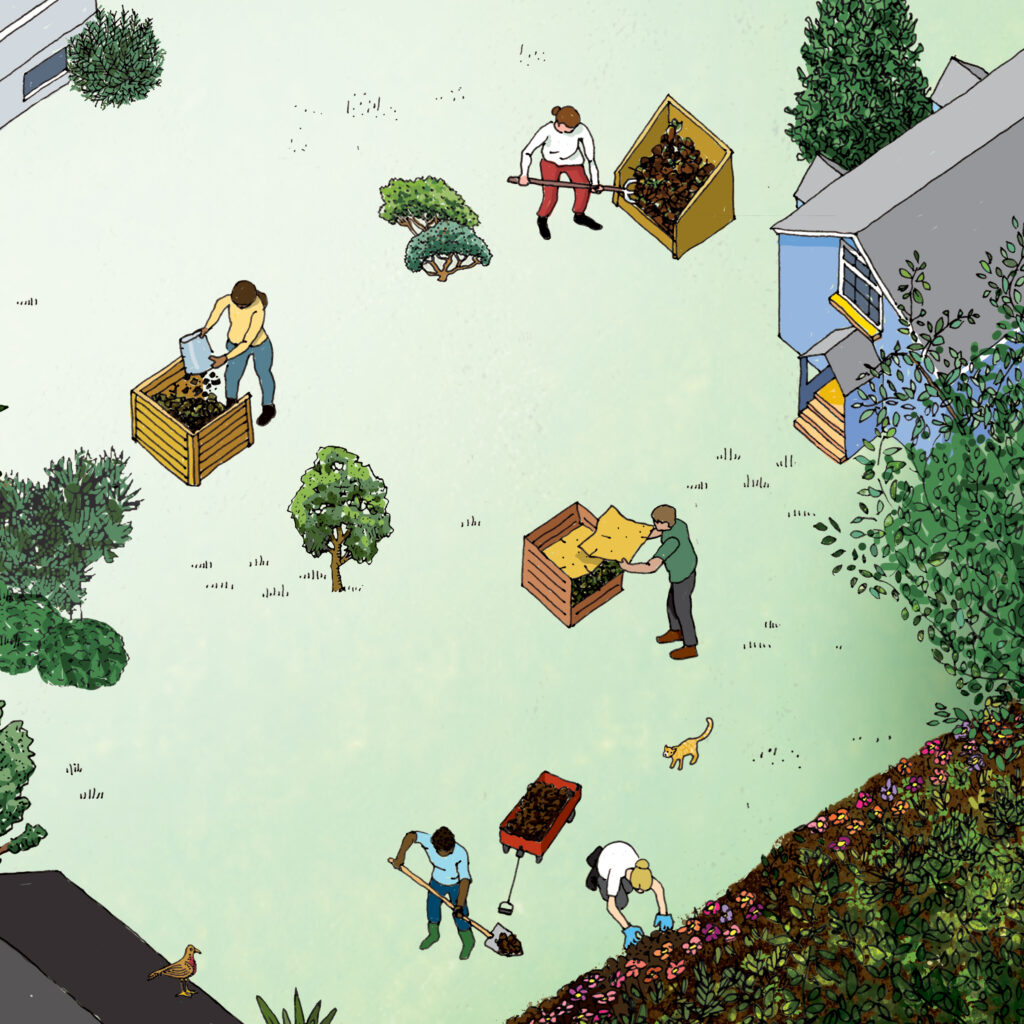
Compost has been found to improve soil health, making the process central to regenerative farming. Composting is the recycling of organic matter into fertilizer by harnessing the power of decomposition. All organic matter decomposes anyway, of course, with or without human intervention. When we compost, we’re simply speeding up this naturally occurring process by creating an ideal environment for all of nature’s handy decomposers like aerobic bacteria, different types of fungi, nematodes, pill bugs, beetles, and worms. Here’s how you can start on your own.
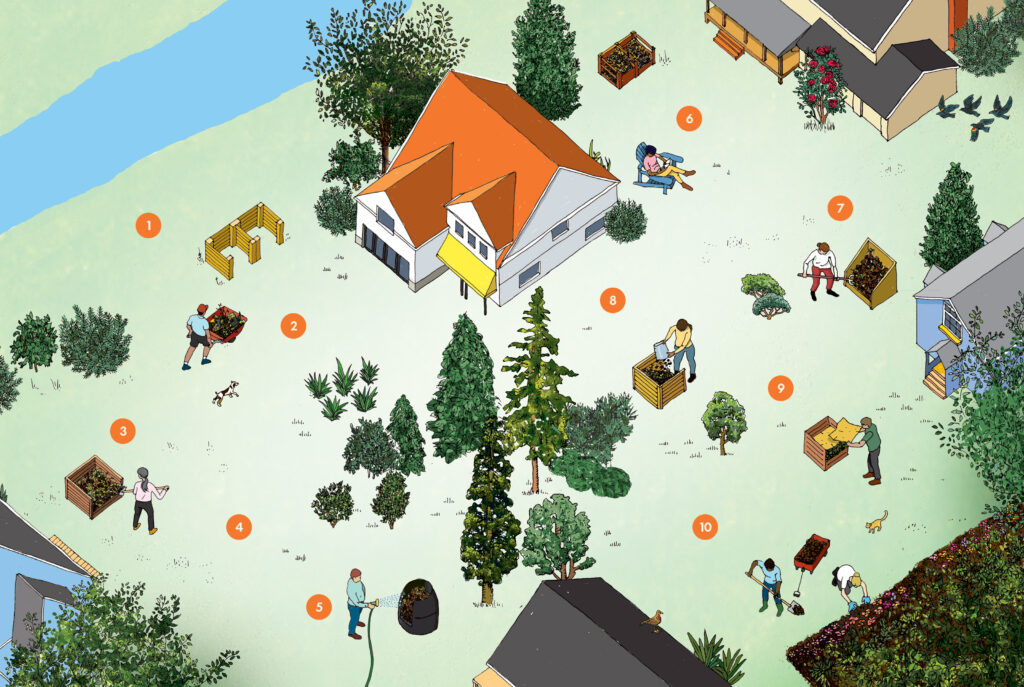
PICK A LOCATION
The best spot to put your compost is on level ground with decent drainage. You should also consider how accessible your compost pile will be to your daily routine. Can you see it from your kitchen window? Do you walk by it on your way out of the house? The easier it is to access and observe the pile, the more likely you are to develop a good composting habit.
GATHER MATERIALS
Your compost will be composed of four basic elements: nitrogen, carbon, moisture, and oxygen. Nitrogen-rich materials generally include food scraps, like vegetable ends and coffee grounds. Carbon-rich materials include dried leaves, twigs, sawdust, and cardboard.
LAYER MATERIALS
Build your pile by layering carbon and nitrogen together. Aim for a balance of roughly three parts carbon to one part nitrogen, by total volume of your pile. This ensures an ideal environment for swift decomposition.
ENCOURAGE AIRFLOW
Your materials should be different sizes: some big, some small. This ensures airflow throughout the pile, which aerobic bacteria—the primary decomposers in your compost heap—need to survive.
ADD WATER
Moisten the layers of your compost pile with water as you build it. You want things to be damp, but not soaking wet.
HAVE PATIENCE
It can take time for a compost pile to get started. The weather, the size of your heap, and the kind of materials you’re composting can all impact the pace of decomposition. You’ll know your pile has become “active” when it starts to heat up.
TURN THE PILE
Every couple of weeks, use a pitchfork or a shovel to turn the pile. This keeps things aerated as decomposition shifts the materials of your pile around. It also helps distribute moisture.
MONITOR MOISTURE
Whenever you turn your pile, check to see if it is looking very dry or wet. Either extreme can create an unfavorable environment for decomposition. If things look dry, add some water. If things look wet, incorporate more carbon materials to improve drainage and absorb excess moisture.
MAINTAIN BALANCE
Continue adding nitrogen and carbon materials to your compost heap in the same ratio that you built your initial pile with. In order to suppress odors and avoid animals, make sure to cover the top of the compost pile with a thick layer of carbon. This could be a few inches of sawdust or a couple sheets of cardboard.
HARVEST
Your compost is ready to use when it looks dark and crumbly, smells like good earth, and is cool to the touch. Use a shovel to dig it out of the compost pile, making sure to sift out any large and undecomposed materials. Add the finished product to your garden beds or houseplants as fertilizer.