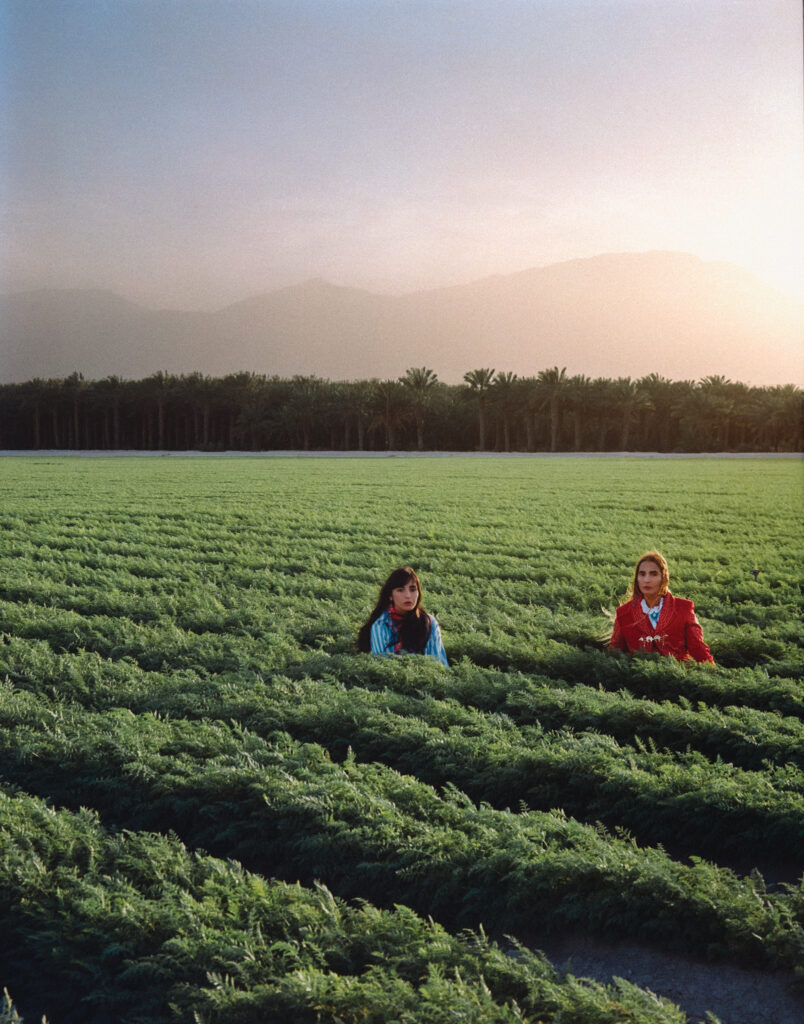
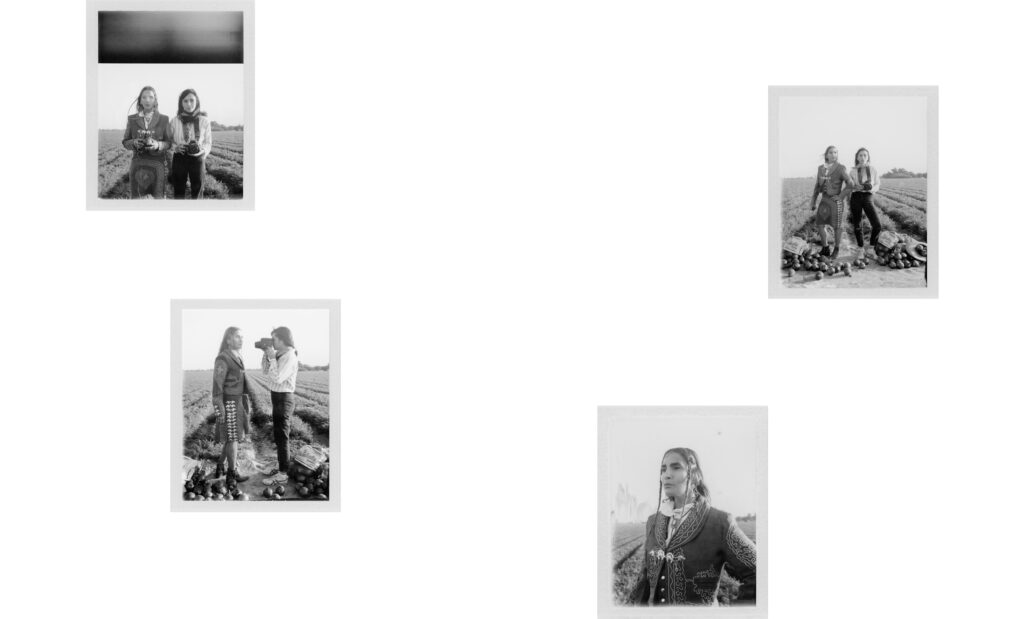
Rows and rows of farmland, rich in vegetation. An overexposed portrait of newborn heifers, lined up as if to pose. Identical twins, standing proud in their grandparents’ fields. These are the images that make up “The Onion Fields,” a collection of work by artists and photographers Ashlie Chavez and Amber Maalouf that spans 15 years, since the siblings began documenting their family’s farm. Rooted in their grandparents’ experience as migrant farmers who cultivated onions, the photographs blend intimate moments with imagery of their farm in Orland, California, illuminating the profound connections between labor, food, and heritage. For the artists, the onion is both reality and metaphor — a symbol of the layers they’ve peeled back over the years to reveal the sacrifices of their grandparents Pablo and Carmen Minor and the enduring strength of small farmers.
At its heart, “The Onion Fields” is more than a tribute to their family’s legacy; it’s a call to reconnect with the roots of our food and the labor behind it. “Small-time farmers are often struggling, if not giving up entirely, because they lack the support system and financial deals that corporate farmers get,” Maalouf and Chavez tell The Rooted Journal in an email interview. “It’s so backwards.” Through their lens, the photographs offer a poignant illustration of how resilience, empathy, and community have carried their family forward, even as the farming landscape evolves.
“Luisa’s Onion Field, Coachella”
THE ROOTED JOURNAL “The Onion Fields” conveys layers of meaning. How did exploring these layers deepen your appreciation for the sacrifices made by migrant farm workers, both in your family and across generations?
Amber Maalouf & Ashlie Chavez First, it has changed the way we buy food. Second, it’s opened our eyes to the reality that in California, sometimes the very people making the sacrifices to make this food available to the masses can’t even afford the food they produce. Buying farm-to-table is absurdly expensive — for the average person, it’s financially burdensome, and for lower-income families, it can be impossible. Third, there’s no repayment worthy of the sacrifice of displacing yourself and your family. So, we do everything possible to make living easier for our elders, from housing to errands and accompanying them back to Mexico. Experiencing these layers firsthand, from childhood to adulthood, gave us a deep appreciation for the sacrifices made by farmers and empathy for those that need a support system to continue farming.
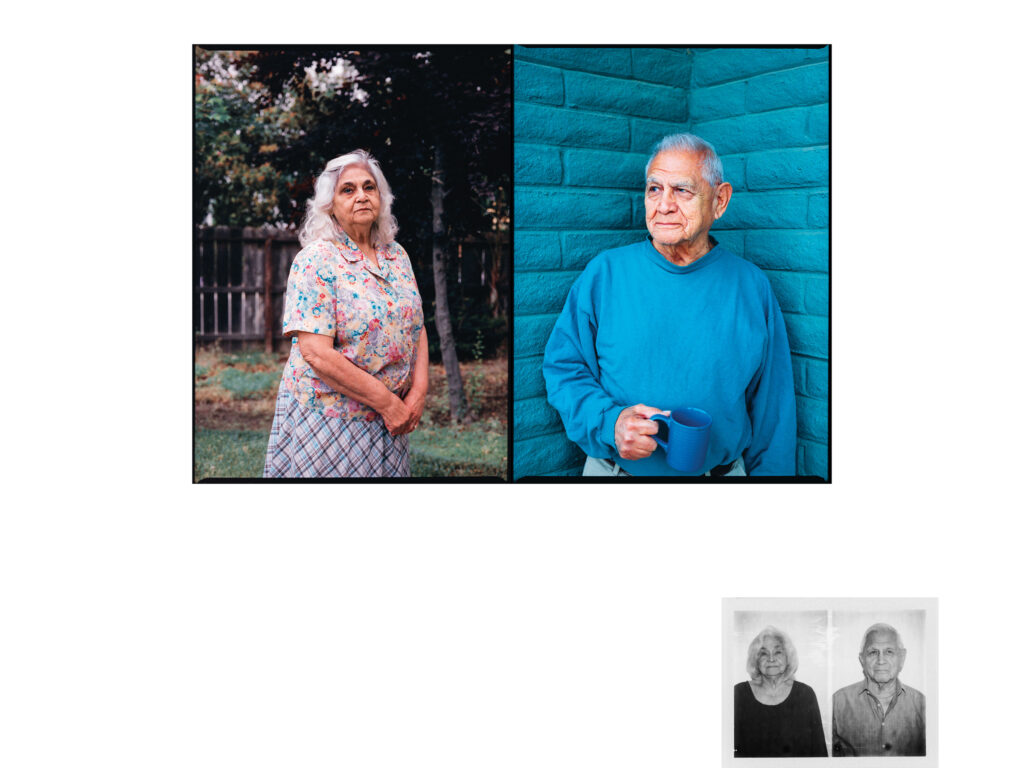
“Carmen and Pablo”
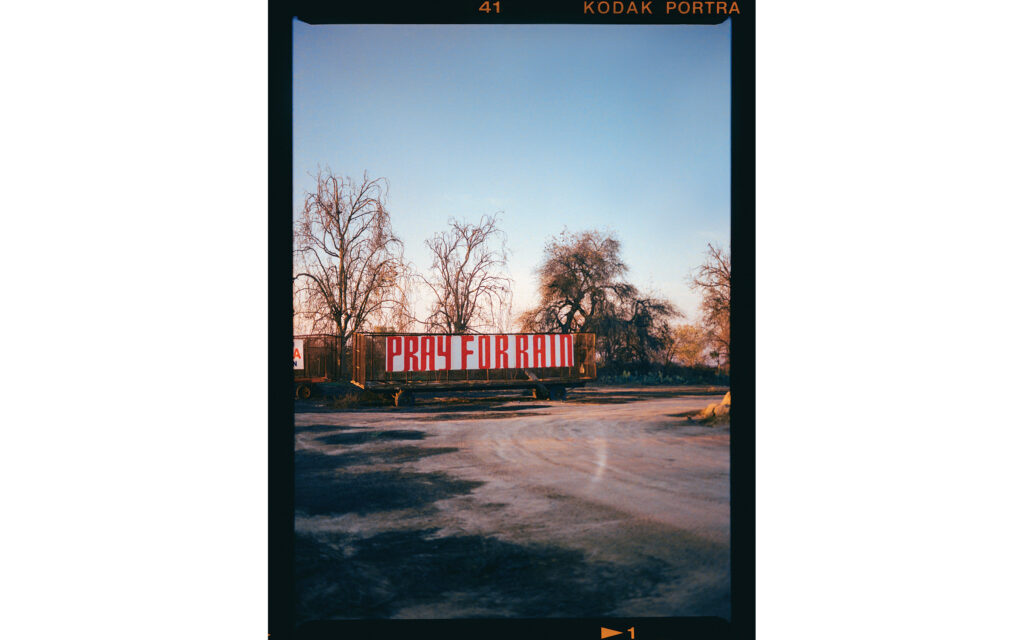
“Pray for Rain, Senora, CA”
TRJ Documenting your family’s farming legacy must have been deeply personal. How has this process shaped your perspective on the importance of knowing where our food comes from?
A&A We all care about things — our health, our children and pets, our future. But taking the time to learn about unseen issues, like where our food comes from, is difficult because there’s no immediate impact or reward for making better decisions. It’s easy to adopt an “out of sight, out of mind” mentality, especially when it comes to buying animal products. The reality is, 90% of meat in the United States comes from CAFOs — concentrated animal feeding operations. Let us be clear: No CAFO is humane. They are the exact opposite of compassion. Despite what anyone tells you, these operations are barely regulated. There is no rulebook governing the conditions in which these animals are kept.
The ripple effects of CAFOs are devastating. Poor oversight of these tortured animals leads to diseased meat and contamination. Think about it — do you really want to eat a steak from an animal raised in a cramped, confined space, pumped full of soy, and slaughtered at three years old when its natural lifespan is 20? What benefit could that possibly have for your body? In CAFOs, animals die in fear, and the quality of your meat depends on the state of the animal at the time of slaughter.
Farm-raised animals, on the other hand, live natural lives. Our grandparents’ cows often lived past 10 years, and just one cow could feed a family of four for years. But fair-priced, ethically raised meat struggles to compete with the cheap, mass-produced meat from CAFOs. This isn’t just a question of price — it’s a question of values, health, and humanity.
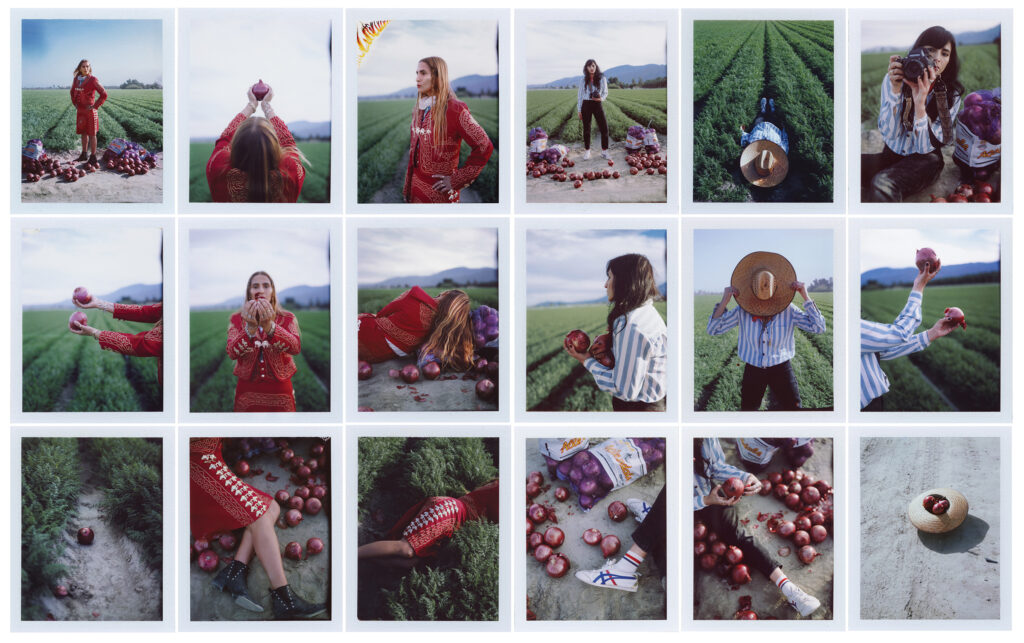
The twins, Amber (on left) and Ashlie (on right), visit the first family farm in the States in Coachella, California.
TRJ Your grandparents’ dedication to the land feels deeply connected to today’s movement toward regenerative agriculture. What parallels do you see between their commitment and this growing shift?
A&A At that time, being sustainable was just a natural farming process — and synonymous with having good morals. Profit wasn’t the only motivation; the quality of the food was, too. They were humane and sustainable farmers without knowing what that meant, and it hadn’t been jeopardized yet by big corporations or technology. Today, people are beginning to question what’s done to our food for a longer shelf life. “You are what you eat” will always hold true. We don’t want to eat preservatives. We want to eat food that benefits us.
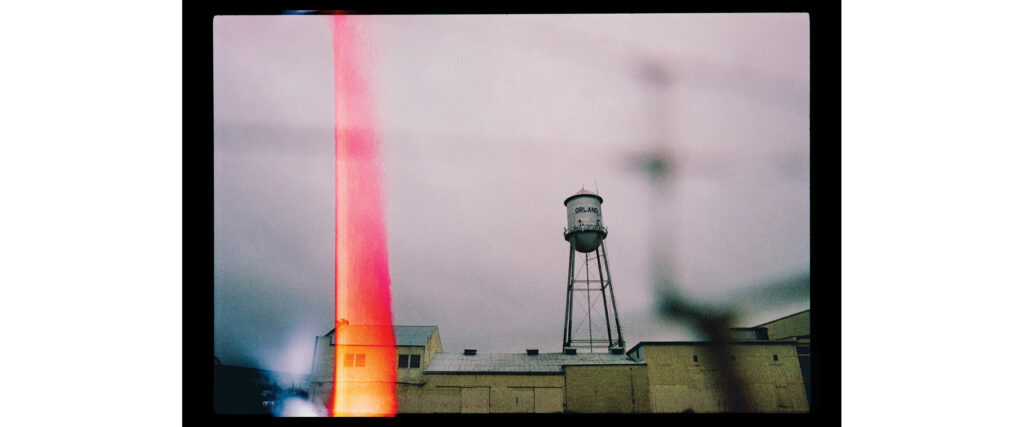
“Orland, CA”
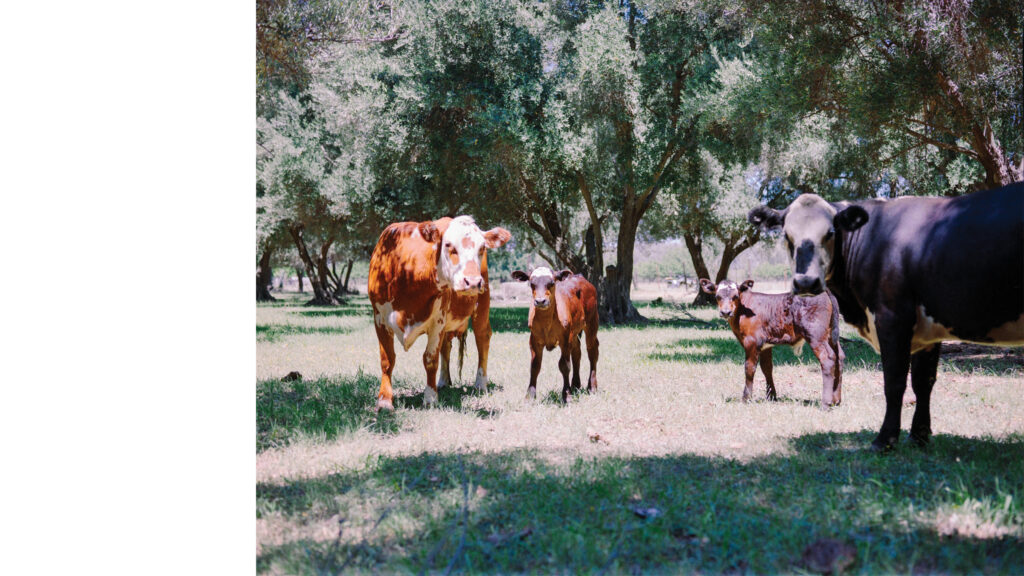
“Newborns”
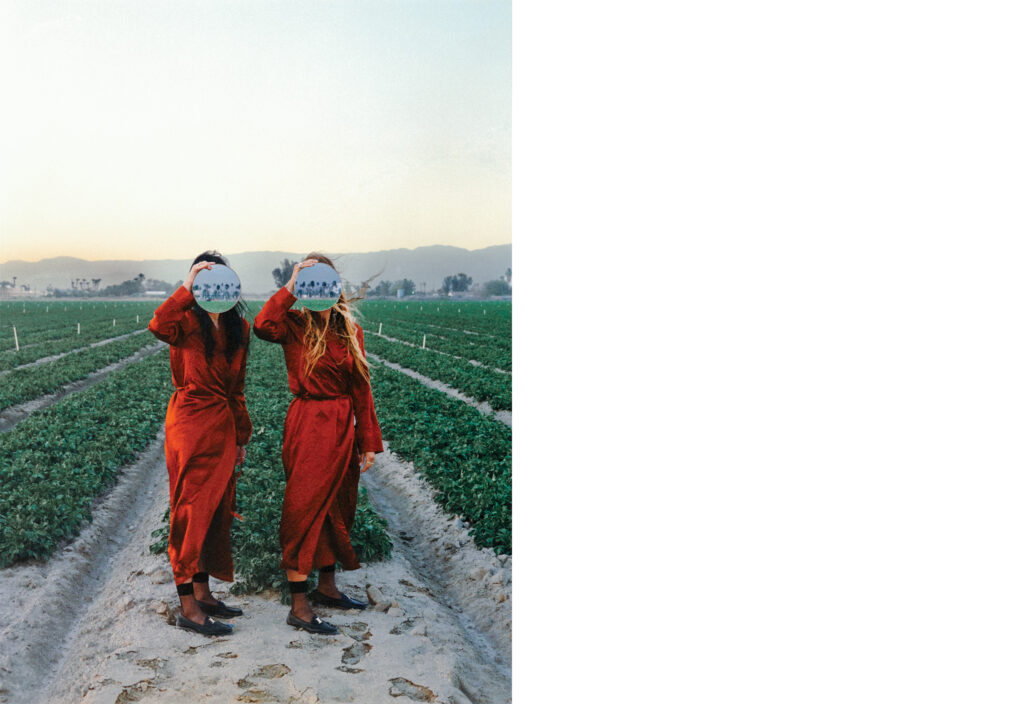
“Awareness”
TRJ How do you hope “The Onion Fields” influences the conversation around farming and sustainable food systems?
A&A We hope it encourages younger generations unfamiliar with farming to learn where their food comes from. There’s a lot of food at big chain grocery stores that we personally don’t support. Get to know what you want to support and what you don’t, because it matters. We grew up being told, “It doesn’t matter how much people don’t buy or eat something; it won’t change how much of it is produced.” But that couldn’t be further from the truth when we look at worldwide numbers.
TRJ These days, so many people feel disconnected from how food is produced. What role do you think storytelling — like your project — can play in bridging that gap?
A&A There’s a trend in American society of not knowing what you don’t want to know — ignorance is bliss. Our documentation focuses more on family history than food production, but it can motivate people to care more about the past. Technology might extend our life expectancy, but principles and knowledge improve quality of life. The gap between food systems and people won’t close until quality supersedes quantity in every industry, until we can become a meatless society. Regenerative farming is our future.